Arcana 5 in a child’s matrix
Serious for their age, this child seeks the meaning of rules and likes passing on what they learn, with adults who keep their word.
- why
- word kept
- passing on
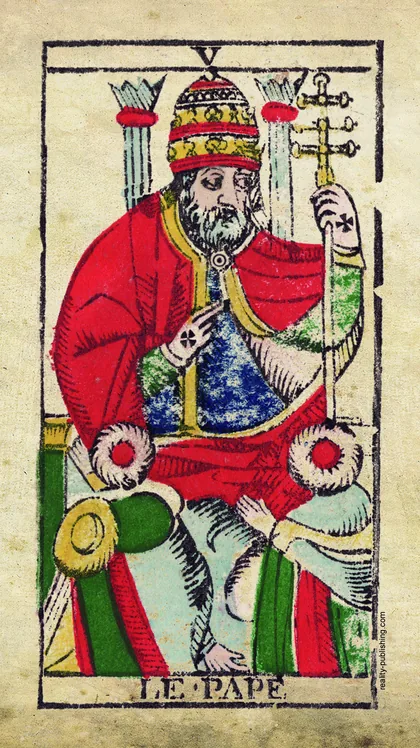
Arcana 5 in a child’s matrix at a glance
In your child, curiosity goes with loyalty: they want to understand the rules of a game, listen to their grandparents’ stories, help a younger child read. They retain what they are taught and like to share it. This reliability, well received, can become a talent for explaining and bringing people together.
Adults who change their mind for no reason, punishments for everyone, or forgotten promises hurt your child deeply. Watch out for sermons too: after enough lessons, they repeat them to their classmates. Prefer a brief explanation, given calmly, and accept that they may object before you answer with arguments.
- The card
- V · The Hierophant
- The position
- A child’s matrix
By Thomas Guilhot · updated
Their character
A child carrying the 5 is curious, serious for their age, and very attached to reference points.
They constantly ask why things are the way they are, want the rules of a game explained before starting, and protest when an adult changes their mind for no reason. They arrange their belongings their own way, know the family’s schedule by heart, and like helping a younger child with homework. Grandparents, family celebrations, and stories of the past fascinate them. Their difficulties: a certain stiffness, a very sharp sense of injustice, a tendency to lecture classmates or, on the contrary, to rebel against an authority they find arbitrary. They need a consistent framework, adults who keep their word, and honest explanations. What helps them grow: books, museums, logic games, and the chance to pass on in turn what they have learned.
Advice for parents
- Explain each important rule instead of answering “because that’s how it is”
- Read a book they chose each evening and talk about it together
- Leaf through family albums with them, telling who was who
- Sign them up for chess, a book club, or a science workshop
- Give them the role of older sibling to a younger child
- Keep the promises made, even the smallest
- Avoid sermons and prefer a short talk once things have calmed down
- Accept that they challenge a decision, then answer with arguments
Girl or boy
In a girl, the 5 often takes the form of a model student who puts a great deal of pressure on herself; in a boy, more often that of a little boss who wants to organize the games and handles contradiction poorly.
With others
At school, the 5 child quickly finds their bearings in how the class works.
They follow instructions, appreciate teachers who know a lot and explain well, and can become the class representative or the tutor others consult. Their classmates count on their reliability, but sometimes find them preachy when they recall the rules or correct a mistake out loud. They handle collective punishments, inconsistent adults, and rules applied to only some poorly: their sense of justice may then push them to object openly. Their friendships are few and solid. It helps to teach them that everyone moves at their own pace, that you can be right without making it felt, and that asking a teacher a question is better than silently judging their method.
In everyday life
At dinner, your child points out that you said “no dessert on weekdays,” and yet there is one.
Do not brush off the objection. Acknowledge the exception, say what justifies it, or admit the oversight. Then suggest they pick a house rule with you to revisit this weekend. They feel taken seriously, and their objection turns into an exchange.
A symbolic reading to better understand a child: never a diagnosis or a label; a childhood professional remains the reference.
Go further
The Hierophant
The card of energy 5Arcana 5 in the portrait
The same energy, in another position of the matrixPortrait 5 and its twelve talents
The same energy, in another position of the matrixArcana 5 in your personal brand
The same energy, in another position of the matrixArcana 5 in the couple matrix
The same energy, in another position of the matrix
How is it calculated?
Nothing changes compared with an adult’s matrix.
Fictional example: a child born on March 14, 2018. The day gives a = 14; the month gives b = 3; the year gives 2 + 0 + 1 + 8 = 11, so c = 11. The lesson d = 14 + 3 + 11 = 28, reduced to 10. The center e = 14 + 3 + 11 + 10 = 38, reduced to 11. Character reads at 14 and 3, the relationship to others at 11.
Frequently asked questions: arcana 5 in a child’s matrix
My child lectures others. How can I steer them away from it?
They are not acting out of pride: they apply the rules they were given and want them to serve everyone. Tell them the rule can be defended tactfully: everyone learns in their own way, and fairness is shared better with gentleness. Offer gentler words, such as asking a question rather than correcting. Give them chances to pass things on one on one.
How should I react when they refuse a rule they find arbitrary?
Hear their objection all the way through, then explain the reason for the rule, or admit that it deserves discussion. A few rules stay non-negotiable, notably safety and respect. Show them the difference between objecting in words and disobeying. A child who understands the meaning of a rule often applies it better than one who merely endures it.
How can I support their bond with their grandparents?
This bond feeds their taste for passing things on. Invite the grandparents to tell them about their childhood, to show them a gesture, a recipe, a photograph. Write these stories down with them in a family notebook. If distance separates them, suggest regular calls or letters. They draw guideposts and a quiet pride from it.
A child’s matrix: the 22 energies
Illustrations: Nicolas Conver’s Tarot de Marseille, dated 1760, restored by Tarot World Project, CC BY-SA 4.0 license, via Wikimedia Commons — images resized and compressed by Versana.