Arcana 22 in a child’s matrix
Joy, freedom, boundless curiosity: this child needs trust, a few clear rules, and promises kept.
- curiosity
- joy of living
- promises kept
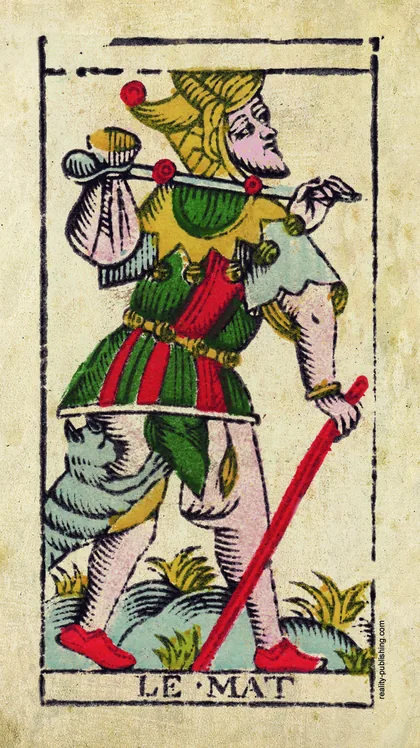
Arcana 22 in a child’s matrix at a glance
Everywhere, your child sows whimsy: a board game with reversed rules, a dinner disguised as a picnic, a joke that makes the whole table laugh. This lightness is a gift. It lets them bounce back, bond with anyone, and suggest what nobody had imagined.
Too many bans make them tense, too much looseness scatters them. Avoid a growing list of rules; prefer two or three clear ones, explained. Above all, keep what you promise: a forgotten show or an outing canceled without a word teaches them that grown-ups’ word does not weigh much, and they remember it.
- The card
- 0 · The Fool
- The position
- A child’s matrix
By Thomas Guilhot · updated
Their character
A child with the 22 is lively, cheerful, curious about everything, and allergic to bans.
They open cupboards, take toys apart to see inside, invent new rules for board games, and slip into every place they are told not to go. They laugh a lot, make others laugh, dress up, and perform little skits for the family. Limits that are too tight make them insolent or make them withdraw; conversely, they need reference points so as not to scatter. They may forget a promise, lose their things, change activities every term. They need trust, room to explore, and adults who laugh with them and let them try new things. They thrive in a home where games and traditions are invented, with varied outings, and the possibility of choosing some of their own activities.
Advice for parents
- Give them as much freedom as they can handle, and widen it with each proof of trust
- Watch comedies together and share their jokes instead of scolding them
- Invent a new family ritual with them each season
- Give them a little pocket money and help them manage it
- Support their new ideas, even when they seem outlandish
- Replace the list of prohibitions with a few clear, explained rules
- Keep every promise you make to them
- Suggest circus, theater, or improv classes
With others
At school, the 22 child is often the class clown.
They make their classmates laugh, start games in the schoolyard, and befriend very different students without regard for groups. Teachers describe them as inventive, endearing, absent-minded, sometimes insolent toward rules they do not understand. They learn well when allowed to explore, through projects, outings, or experiments, and tune out during repetitive exercises. Their fragile points show up in their word: a promised assignment forgotten, a classmate let down by a missed meeting. It helps to teach them to write down their commitments, finish what they start, and understand that a shared rule also protects their freedom.
In everyday life
It is six o’clock, the school bag lies on the floor, the snack has vanished, and your child is already describing a plan for a treehouse.
Laugh with them, then propose a pact: bag put away and homework done, then treehouse plans on the table. Write the commitment on a colorful board. They remember better what they decided themselves, and the freedom earned becomes a logical reward.
A symbolic reading to better understand a child: never a diagnosis or a label; a childhood professional remains the reference.
Go further
The Fool
The card of energy 22Arcana 22 in the portrait
The same energy, in another position of the matrixPortrait 22 and its twelve talents
The same energy, in another position of the matrixArcana 22 in your personal brand
The same energy, in another position of the matrixArcana 22 in the couple matrix
The same energy, in another position of the matrix
How is it calculated?
Nothing changes compared with an adult’s matrix.
Fictional example: a child born on March 14, 2018. The day gives a = 14; the month gives b = 3; the year gives 2 + 0 + 1 + 8 = 11, so c = 11. The lesson d = 14 + 3 + 11 = 28, reduced to 10. The center e = 14 + 3 + 11 + 10 = 38, reduced to 11. Character reads at 14 and 3, the relationship to others at 11.
Frequently asked questions: arcana 22 in a child’s matrix
Why do they forget everything we ask?
Their mind is already far away, turned toward the next discovery. It is not contempt. Give them visual tools: a board, pictograms, a colored alarm. Entrust them with one thing at a time and praise every commitment kept. Responsibility is acquired through small repeated successes, much more than through reproach.
How can I set limits without breaking their freedom?
Present the rules as shared protections, not punishments. Explain the why in one sentence, and give them a real choice within the framework: the order of tasks, the way of doing them. When they keep their commitment, widen their margin. This progression makes them want to earn your trust.
What if they upset calmer siblings?
Every child needs their place. Make room for moments when the calmer ones play quietly, and others when their energy has free rein, outside or in a dedicated room. Avoid presenting them as the household’s troublemaker: their laughter is also a resource for the whole family. A few shared rules, said to everyone, ease most of the friction.
A child’s matrix: the 22 energies
Illustrations: Nicolas Conver’s Tarot de Marseille, dated 1760, restored by Tarot World Project, CC BY-SA 4.0 license, via Wikimedia Commons — images resized and compressed by Versana.