Arcana 1 in a child’s matrix
Ideas launched, trials in a row: this child learns by doing, and grows when helped to see their projects through to the end.
- ideas launched
- trying allowed
- projects finished
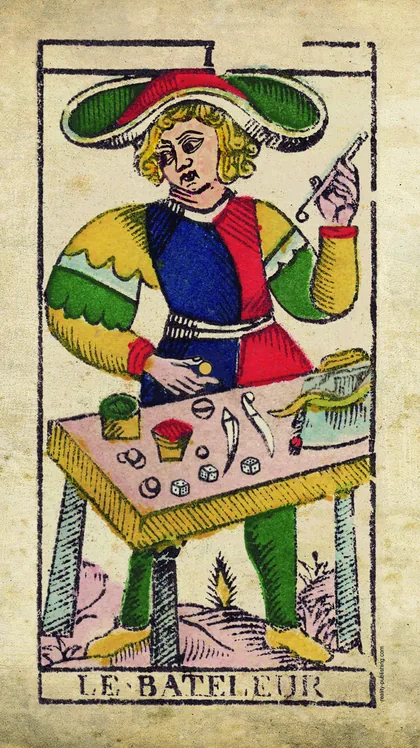
Arcana 1 in a child’s matrix at a glance
Your child dares: they suggest a brand-new game, volunteer, show their hideout to the whole family. Every attempt, successful or not, feeds their confidence. This quiet boldness, when adults encourage it, gradually becomes the ability to start things and bring others along.
Doing things for them, or asking them to be the best: that is the pitfall. Redoing their craft project to make it perfect, comparing them to a cousin, answering a clumsy moment with irony: all of this puts out their wish to try. They need to be recognized for effort, not only for results.
- The card
- I · The Magician
- The position
- A child’s matrix
By Thomas Guilhot · updated
Their character
A child carrying the 1 is lively, curious, full of ideas, and in a hurry to try everything.
They take their toys apart to see what is inside, invent game rules, start building a hut before snack time and move on to something else as soon as it stands up. They talk early and a lot, love to tell stories, negotiate bedtime, and lead the gang on the playground. They handle losing poorly and may get angry when an adult corrects the way they do something or when a classmate wins a game. They need freedom to experiment, adults who believe in their ideas, and a framework that helps them finish what they start. What helps them flourish: hands-on activities, sports where you make progress, the chance to present their creations to the family, and defeats explained rather than dramatized.
Advice for parents
- Explain what a failure lets them learn instead of downplaying their disappointment
- Imagine a project with them, then plan the steps together to carry it out
- Give them an age-appropriate toolbox and salvaged materials
- Help them finish a craft or a puzzle before starting another
- Never compare them to other children, or demand that they come first
- Sign them up for theater, climbing, or a robotics workshop
- Do not leave them alone facing a problem: look for the solution with them
- Entrust them with small real responsibilities, such as organizing an outing
Girl or boy
A 1 girl is sometimes held back because she is judged too bossy; her taste for taking initiative should on the contrary be encouraged. A 1 boy above all needs to learn to lose without anger and to share the spotlight.
With others
At school, the 1 child quickly takes the place of leader.
They answer before the question is even finished, suggest the recess games, and rally a team around their idea. Teachers describe them as bright, resourceful, sometimes impatient and not inclined to follow instructions to the end. They learn better by handling and experimenting than by copying. Their sensitive point remains criticism: being corrected publicly by the teacher can offend them deeply, and a failure sometimes makes them shut down or lash out. Some 1 children lacking confidence do the opposite and no longer dare to speak. Help them welcome their classmates’ suggestions, accept not always being the one to decide, and carry a presentation or a group project through to the final handover.
In everyday life
On a Wednesday afternoon, your child announces they will build a marble run from cardboard tubes.
They get excited, take over the whole living room, then lose patience with a tube that will not stay up. Instead of fixing it, ask a question: “What else could you try?” Stay next to them without touching anything. When the run finally works, let them present it to you.
A symbolic reading to better understand a child: never a diagnosis or a label; a childhood professional remains the reference.
Go further
The Magician
The card of energy 1Arcana 1 in the portrait
The same energy, in another position of the matrixPortrait 1 and its twelve talents
The same energy, in another position of the matrixArcana 1 in your personal brand
The same energy, in another position of the matrixArcana 1 in the couple matrix
The same energy, in another position of the matrix
How is it calculated?
Nothing changes compared with an adult’s matrix.
Fictional example: a child born on March 14, 2018. The day gives a = 14; the month gives b = 3; the year gives 2 + 0 + 1 + 8 = 11, so c = 11. The lesson d = 14 + 3 + 11 = 28, reduced to 10. The center e = 14 + 3 + 11 + 10 = 38, reduced to 11. Character reads at 14 and 3, the relationship to others at 11.
Frequently asked questions: arcana 1 in a child’s matrix
My child drops whatever they start. How can I help?
This energy brims with ideas and quickly tires of the follow-through. Suggest breaking each project into small steps with a box to tick, and celebrate every step completed. Do not force them to finish everything at all costs: help them choose what deserves to be seen through. The pleasure of finishing is learned through small, repeated successes.
How should I react when they get upset about losing?
Wait for the anger to settle, then talk about the game without judging. Name what they did well before mentioning what slipped away. Sometimes play with them and lose on purpose, then lose for real, so they see you stay in good spirits. They will learn to take a defeat as one moment of the game.
Should I always let them decide?
Not always, but often about what concerns them: the choice of an activity, the decoration of a corner, the order of steps in a project. They then understand that deciding is a commitment and takes thought. For the rest, present the family’s choices as teamwork, where their opinion matters without being enough to settle things.
A child’s matrix: the 22 energies
Illustrations: Nicolas Conver’s Tarot de Marseille, dated 1760, restored by Tarot World Project, CC BY-SA 4.0 license, via Wikimedia Commons — images resized and compressed by Versana.