Arcana 12 in a child’s matrix
A generous child with a singular outlook, who thinks upside down compared to others and gains by learning that they may choose themselves too.
- generosity
- offbeat outlook
- right to refuse
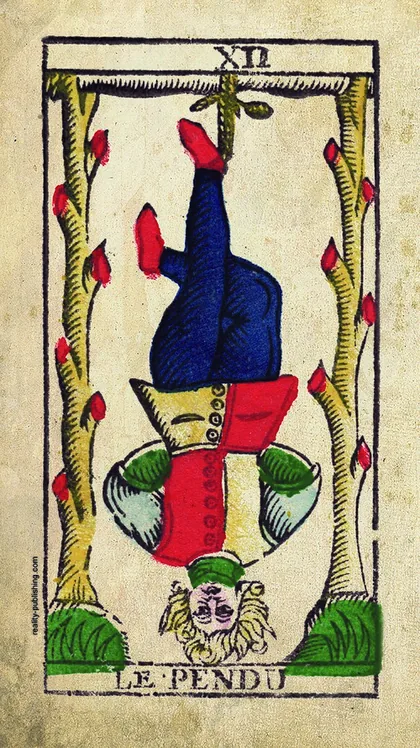
Arcana 12 in a child’s matrix at a glance
Your child notices what escapes others: the solution from the side, the classmate left alone, the detail that changes everything. This fresh outlook makes them a good peacemaker very early. When they feel listened to, they put their ingenuity at the service of the group and take real pride in it.
Their altruism can lead them to fade into the background: they give up their seat, their snack, their idea, then brood in silence. Do not ask them to always be the accommodating one among the siblings. If you praise them mostly when they forget themselves, they will conclude that their worth lies in what they give. Tell them they matter for their own sake too.
- The card
- XII · The Hanged Man
- The position
- A child’s matrix
By Thomas Guilhot · updated
Their character
A child carrying the 12 is gentle, compassionate, and often surprising in their ideas.
They notice the classmate crying in a corner, share their snack without being asked, and want to bring home every abandoned animal. They invent games with unexpected rules, build forts out of whatever they find, and imagine stories where everything happens upside down. Their sensitivity makes them fragile: an unfair remark hurts them for a long time, and they may nurse a grudge in silence or complain instead of acting. They sometimes hand the decision to others so as not to disappoint them. They need to feel that their kindness is seen, but also that they have the right to say no. What helps them flourish: music, drawing, writing little stories, activities that strengthen the body like gymnastics or kids’ yoga, and parents who believe in their strength.
Advice for parents
- Encourage them to give their opinion, even when it differs from yours
- Teach them to politely refuse a game or a loan they do not like
- When they face a problem, ask them for three different solutions
- Take part with them in a toy drive or a charity action
- Never invoke your fatigue or your health to get their obedience
- Sign them up for a music class or a writing workshop
- Let them solve small difficulties by themselves
- Point out the good side of a hard day instead of commenting on what went wrong
With others
At school, the 12 child is often the class confidant.
They console, lend their things, defend the classmate being mocked, and teachers appreciate their kindness and imagination. In class, their answers surprise: they approach an exercise by an unusual path, which can throw off a teacher attached to conventional methods. Their vulnerability lies in their difficulty defending themselves. They may let a group pull them along, agree to do another student’s homework, or endure mockery without speaking of it. When they feel left out, they withdraw and brood. Help them say what they think in front of others, ask for help rather than suffer in silence, and choose friends who respect them.
In everyday life
Wednesday after swimming: your child gave up the last play slot to a friend, and comes home silent, bag on their shoulder.
Do not decide for them. Ask what they would have wanted, then help them find the sentence: “Today it’s my turn.” Practicing it at home, for fun, makes it easier to say out loud elsewhere.
A symbolic reading to better understand a child: never a diagnosis or a label; a childhood professional remains the reference.
Go further
The Hanged Man
The card of energy 12Arcana 12 in the portrait
The same energy, in another position of the matrixPortrait 12 and its twelve talents
The same energy, in another position of the matrixArcana 12 in your personal brand
The same energy, in another position of the matrixArcana 12 in the couple matrix
The same energy, in another position of the matrix
How is it calculated?
Nothing changes compared with an adult’s matrix.
Fictional example: a child born on March 14, 2018. The day gives a = 14; the month gives b = 3; the year gives 2 + 0 + 1 + 8 = 11, so c = 11. The lesson d = 14 + 3 + 11 = 28, reduced to 10. The center e = 14 + 3 + 11 + 10 = 38, reduced to 11. Character reads at 14 and 3, the relationship to others at 11.
Frequently asked questions: arcana 12 in a child’s matrix
My child gives everything away. Should I worry?
Generosity is a fine quality, and it would be a shame to curb it. Watch what goes with it instead: do they give with pleasure or to avoid a conflict? If they come home upset, help them spot the difference between offering and giving in. A child who can say no can give wholeheartedly, with no hidden resentment.
Why do their ideas surprise their teacher so much?
They often approach an exercise by a side road. That can be confusing, but it shows a lively mind. You can suggest they also show the expected method, without giving up their own, and present it as a second route. Valuing this inventiveness with the teacher serves your child better than correcting it.
How can I help them let go without being walked over?
Letting go is not submitting. Help them tell apart the small things that can pass, a lost game, an order of turns, from those that matter to them. On the first, welcome their flexibility; on the second, teach them to set a calm limit. Your own reactions to disagreements serve as their model.
A child’s matrix: the 22 energies
Illustrations: Nicolas Conver’s Tarot de Marseille, dated 1760, restored by Tarot World Project, CC BY-SA 4.0 license, via Wikimedia Commons — images resized and compressed by Versana.