Arcana 3 in a child’s matrix
A generous, creative child, attached to home and belongings, who thrives when given real responsibilities.
- generosity
- creation
- warm home
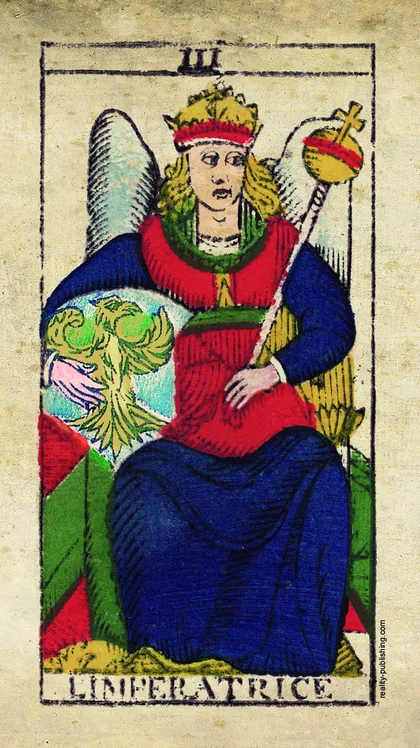
Arcana 3 in a child’s matrix at a glance
Your child likes things to be beautiful and well kept: their room, their snack, a cake made for friends. They share readily and are protective of the more fragile. This practical generosity, supported by real tasks, can turn into common sense and a talent for keeping a group alive.
Giving them everything, or deciding everything for them: two slopes to avoid. An abundance of gifts gets them used to receiving without effort, and overprotection keeps them from growing. Watch their bossy side too: without a limit set gently, they may order their classmates around instead of suggesting.
- The card
- III · The Empress
- The position
- A child’s matrix
By Thomas Guilhot · updated
Their character
A child carrying the 3 often has natural charm and a marked taste for beautiful things.
They like their room to be pleasant, choose their toys carefully, and care about their belongings. Very concrete, they quickly grasp the value of objects and money, and can negotiate their rewards with talent. Sociable, they seek company, parties, friends, and feel at ease under the gaze of others. They also like to organize games and hand out roles, with a bit of a bossy streak that handles frustration poorly. Their generosity is real: they share their snack and rush to help a classmate in trouble. They need warmth, a stable home, time outdoors, in the garden or the forest, and chances to create: modeling clay, cooking, gardening, sewing. What helps them thrive: a parent who encourages them, gives them real responsibilities, and knows how to let them grow.
Advice for parents
- Give them a flowerpot or a patch of the vegetable garden that they look after without help
- Cook a simple recipe with them every week
- Teach them to manage their allowance with a piggy bank that has three compartments
- Play management or pretend-shop games to explore the value of things
- Let them make small decisions without correcting them right away
- Avoid overprotecting them: accept outings and nights at friends’ houses
- Have them say thank you for what the family has, without an excess of gifts
- Ask them kindly rather than demanding when they give orders to others
Girl or boy
A 3 girl needs a mother who shows her a fulfilled femininity, gentle and self-assured, and who respects the father. A 3 boy benefits from spending time with an attentive father, from practicing a sport or a martial art, and from learning to understand girls rather than fear them.
With others
At school, the 3 child easily finds a place in the group.
They like being at the center, organizing a school fair, a show, a bake sale, and the others readily follow. Teachers notice their practical sense, their care, their kindness toward the more fragile, but also a tendency to boss classmates around or to accept poorly that a game does not go as planned. They work better when they see the concrete use of what they learn: fractions through a recipe, percentages through pocket money. In adolescence, the attention of peers and of the opposite sex matters a great deal. Teach them to suggest rather than impose, to accept the ideas of others, and to choose friends for their heart more than for their status.
In everyday life
On Saturday morning, your child wants to prepare a snack for two friends.
Rather than doing it all for them, hand over the recipe, the apron, and responsibility for the quantities. The batter overflows a little, the dish is crooked, no matter. When the friends arrive, they hand out the portions proudly. Thank them for what they made with their hands, more than for the result.
A symbolic reading to better understand a child: never a diagnosis or a label; a childhood professional remains the reference.
Go further
The Empress
The card of energy 3Arcana 3 in the portrait
The same energy, in another position of the matrixPortrait 3 and its twelve talents
The same energy, in another position of the matrixArcana 3 in your personal brand
The same energy, in another position of the matrixArcana 3 in the couple matrix
The same energy, in another position of the matrix
How is it calculated?
Nothing changes compared with an adult’s matrix.
Fictional example: a child born on March 14, 2018. The day gives a = 14; the month gives b = 3; the year gives 2 + 0 + 1 + 8 = 11, so c = 11. The lesson d = 14 + 3 + 11 = 28, reduced to 10. The center e = 14 + 3 + 11 + 10 = 38, reduced to 11. Character reads at 14 and 3, the relationship to others at 11.
Frequently asked questions: arcana 3 in a child’s matrix
My child bosses their friends around. How can I guide that?
Name what you see without accusing: “You have lots of ideas for the game.” Then suggest gathering the others’ opinions before handing out roles. Propose taking turns: each child leads the game in turn. They discover that being followed comes less from the order given than from the enthusiasm you give others.
How can I teach the value of money without pushing?
They grasp concrete things quickly. A small regular sum, split into three jars (spend, save, give), speaks to them more than a lecture. Let them make a mistake on an impulse buy and learn from it without reproach. Involve them in the week’s shopping. They will come to understand that we choose, we wait, and we share.
Why are their belongings so important to them?
For them, their objects are an extension of their world: tidying and protecting them is a way to feel at home. Respect this attachment without mocking it, and warn them before lending or moving something. You can invite them to pick an item to give away from time to time, so that sharing stays an impulse and not an obligation.
A child’s matrix: the 22 energies
Illustrations: Nicolas Conver’s Tarot de Marseille, dated 1760, restored by Tarot World Project, CC BY-SA 4.0 license, via Wikimedia Commons — images resized and compressed by Versana.