Arcana 7 in a child’s matrix
Always on the move and aimed at a goal, this child does best with physical momentum and challenges that suit them.
- momentum
- goals
- physical outlet
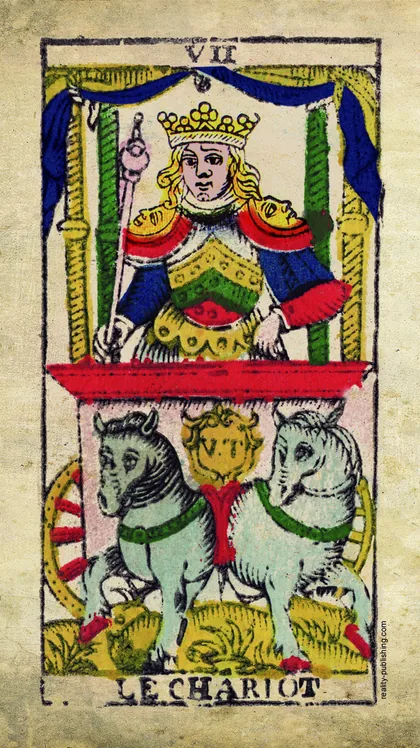
Arcana 7 in a child’s matrix at a glance
Your child charges ahead: they climb, pedal, want to finish their puzzle before dinner, and adapt easily to a new place. Their energy aimed at a goal is precious. With support, it can become endurance, organization, and a real pleasure in taking up challenges.
Sitting for a long time, waiting for others to finish, or being interrupted over and over agitates them and sets them against you. Also avoid praising them only for wins: they might stop daring to commit where they could lose. Gently show them, too, how to listen before deciding.
- The card
- VII · The Chariot
- The position
- A child’s matrix
By Thomas Guilhot · updated
Their character
A child carrying the 7 is a little explorer always on the move.
They climb everywhere, run rather than walk, ask for the bike, the scooter, the park, and handle long hours sitting poorly. They like winning, organizing recess games, and cry with rage when they lose a card game. They often have a goal in mind, building the tallest tower or finishing the puzzle before dinner, and get annoyed when interrupted. Trips, moves, and new schools unsettle them less than others: they adapt quickly. They need physical activity every day, goals sized to them, and real responsibilities. They thrive with a family on the move, challenges to take on, and adults who praise them for their effort as much as for their victories.
Advice for parents
- Plan a real outdoor burn-off every day: park, bike, scooter
- Find them a handball, rugby, or basketball club to learn to win and to lose
- Give them a real mission: packing their bag, guiding the way on a familiar route
- Post a simple goals chart with a box to check
- Let them choose the route of a weekend walk
- Praise them for the effort made, even when they do not win
- Teach them to wait their turn through board games
Girl or boy
In a girl, the 7 shows in a leader’s temperament that those around her sometimes wrongly call bossy; she should be encouraged rather than reined in. In a boy, it often shows as constant competition that needs to be channeled toward sports and projects.
With others
At school, the 7 child readily takes the lead of the group.
They organize the soccer teams, suggest games, volunteer to be class representative or to fetch a document from the office. Teachers describe them as energetic, motivated, sometimes impatient and bossy with classmates. They learn better by moving: handling things, going to the board, working on a concrete project. Their vulnerabilities appear when they are held back: sitting too long, waiting until the whole class has finished, accepting that someone else leads. They may then get restless, push others, or dig in. Help them welcome others’ ideas before imposing their own, suggest rather than order, and acknowledge that a classmate had a better idea.
In everyday life
On a rainy Sunday, your child circles around the apartment.
Rather than asking them to calm down, propose a short challenge: a cushion obstacle course to complete in two minutes, then a board game where everyone waits their turn. Praise the effort they put into waiting. After the burst of activity, their calm returns on its own, and they are more available for what comes next.
A symbolic reading to better understand a child: never a diagnosis or a label; a childhood professional remains the reference.
Go further
The Chariot
The card of energy 7Arcana 7 in the portrait
The same energy, in another position of the matrixPortrait 7 and its twelve talents
The same energy, in another position of the matrixArcana 7 in your personal brand
The same energy, in another position of the matrixArcana 7 in the couple matrix
The same energy, in another position of the matrix
How is it calculated?
Nothing changes compared with an adult’s matrix.
Fictional example: a child born on March 14, 2018. The day gives a = 14; the month gives b = 3; the year gives 2 + 0 + 1 + 8 = 11, so c = 11. The lesson d = 14 + 3 + 11 = 28, reduced to 10. The center e = 14 + 3 + 11 + 10 = 38, reduced to 11. Character reads at 14 and 3, the relationship to others at 11.
Frequently asked questions: arcana 7 in a child’s matrix
How can I help them sit still for homework?
Alternate seated time with active breaks: ten minutes of work, a short run down the hallway, then back to it. Set a visible goal, like finishing a page before the timer goes off. Suggest reading or reviewing standing up, or while walking. When their body has moved before the effort, their attention follows far more easily.
How can I keep them occupied on long trips?
Announce the length and the stops before leaving, with a map they can follow with a finger. Give them a mission: watching for road signs, counting bridges, holding the break timer. Plan a stop to run around every two hours. A visible goal and an active role make the wait much more bearable for a child who likes to move forward.
How can I help them adjust when the family moves?
Their taste for movement helps, but they still need guideposts. Involve them in the preparations, let them choose a corner of their future room, announce the steps early. Keep a few rituals the same, like the bedtime story. They will adapt quickly to new places, as long as they feel that what matters to them travels with the family.
A child’s matrix: the 22 energies
Illustrations: Nicolas Conver’s Tarot de Marseille, dated 1760, restored by Tarot World Project, CC BY-SA 4.0 license, via Wikimedia Commons — images resized and compressed by Versana.