Arcana 6 in a child’s matrix
Affectionate and attentive to the atmosphere at home, this child grows in gentleness and learns to choose step by step.
- tenderness
- guided choices
- beauty
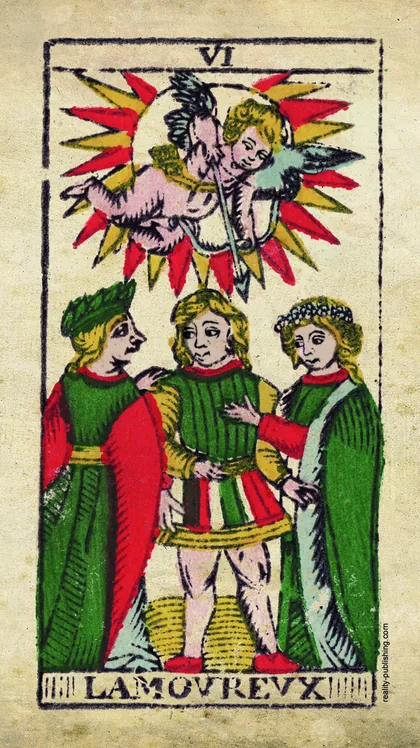
Arcana 6 in a child’s matrix at a glance
Your child creates connection wherever they go: they draw for you, comfort a classmate, tidy their notebooks and room with taste. Sincere compliments make them bloom. This tenderness, combined with a real taste for beauty, can become an ease in connecting with others and in creating.
Comparisons with a sibling or a classmate, adult arguments within earshot, and remarks about their appearance hurt them more than you might imagine. Also take care not to systematically choose for them because they hesitate: they would end up doubting themselves.
- The card
- VI · The Lovers
- The position
- A child’s matrix
By Thomas Guilhot · updated
Their character
A child carrying the 6 is affectionate, sensitive to the atmosphere at home, and very attentive to how adults look at them.
They love cuddles, compliments, pretty things: they choose their clothes with care, arrange their stuffed animals by color, and cover their bedroom walls with drawings. They make friends easily and suffer greatly from a falling-out in the schoolyard or a mocking remark. Choosing often puts them in difficulty: between two ice cream flavors, two activities, or two friends, they may hesitate for a long time and ask the adult to decide. They need unconditional love, a peaceful atmosphere, and chances to create: drawing, music, dance, dress-up, little shows. What helps them thrive: a family where people make up quickly after an argument, where small victories are celebrated, and where their tastes are taken seriously.
Advice for parents
- Hold them in your arms and tell them you love them, even on a day of anger
- Offer them two simple options and let them choose without stepping in
- Sign them up for a drawing, singing, or dance workshop
- Never compare them to a brother, a sister, or a classmate
- Put them in charge of decorating the table for a festive meal
- Help them put words to what they feel after an argument
- Value their efforts and their kindness more than their appearance
With others
At school, the 6 child above all seeks to be liked.
They gravitate toward popular students, readily lend their things, and often play the role of messenger or peacemaker in disputes. Teachers describe them as kind, neat, attentive to others, sometimes too talkative. They work better with a teacher they like: a warm relationship motivates them more than a grade. Their vulnerabilities show up in friendship rivalries: a “best friend” who prefers someone else can leave them sad for weeks, and they sometimes keep a mockery to themselves rather than talk about it. It helps to teach them to say no to a classmate without fearing losing them, to keep a secret they were told, and to choose their friends for who they are rather than for their popularity.
In everyday life
In front of the closet, your child hesitates between two sweaters and asks you to decide.
Offer only two options and say simply: “Take the one you feel like.” Let them decide, even if the combination surprises you a great deal that morning. In the evening, if they second-guess their choice, answer with humor rather than irritation. Over time, choosing becomes a quiet habit rather than an ordeal.
A symbolic reading to better understand a child: never a diagnosis or a label; a childhood professional remains the reference.
Go further
The Lovers
The card of energy 6Arcana 6 in the portrait
The same energy, in another position of the matrixPortrait 6 and its twelve talents
The same energy, in another position of the matrixArcana 6 in your personal brand
The same energy, in another position of the matrixArcana 6 in the couple matrix
The same energy, in another position of the matrix
How is it calculated?
Nothing changes compared with an adult’s matrix.
Fictional example: a child born on March 14, 2018. The day gives a = 14; the month gives b = 3; the year gives 2 + 0 + 1 + 8 = 11, so c = 11. The lesson d = 14 + 3 + 11 = 28, reduced to 10. The center e = 14 + 3 + 11 + 10 = 38, reduced to 11. Character reads at 14 and 3, the relationship to others at 11.
Frequently asked questions: arcana 6 in a child’s matrix
Why do they hesitate so much between two options?
They weigh the effect of each choice on others and fear disappointing. Limit the options to two or three, announce a time to decide, then back their decision without revisiting it. Reassure them: you can be wrong without losing anyone’s affection. Each small choice they own builds their confidence far more than a choice made for them.
How can I help when a friend leaves them out?
Welcome their hurt without shrinking it: “It hurts when you feel left out.” Then help them see that a friendship goes through ups and downs. Suggest a simple sentence to say to the friend, or another activity to propose. They learn to look after the bond without disappearing.
How can I keep them from trying too hard to please?
Show them that you love them also when they say no or when they sulk. Encourage them to express a polite disagreement, for example by turning down a game that does not suit them. Value their kindness without tying it to obedience. They come to understand that their place does not depend on constant approval from others.
A child’s matrix: the 22 energies
Illustrations: Nicolas Conver’s Tarot de Marseille, dated 1760, restored by Tarot World Project, CC BY-SA 4.0 license, via Wikimedia Commons — images resized and compressed by Versana.