The Lovers is readily read as the card of choice: two directions, two attachments, two ways of living a situation, and a moment when it becomes hard to decide nothing.
Many readers see in it first a question of relationship, but the card also touches on values: what matters enough that you commit to it. The Cupid above the figure is a reminder that attraction exists, without saying what to do with it. Its tone is questioning: the outcome depends on the decision made, not on the card. In a spread, it could push you to name both options clearly, to spot what each one asks, then to choose without waiting for a sign to decide in your place.
choice
attraction
values
The Lovers in your life
In love
An attraction or a commitment to clarify; saying what you really want helps more than letting the situation decide by itself.
In couple life, the card can evoke an attraction, a hesitation between two paths, or a commitment to clarify. It invites you to say what you really want, rather than letting the situation decide by itself.
At work
A choice of position, team, or path where values weigh as much as interest; compare before committing.
At work, the Lovers is read as a choice of position, team, or direction, where values weigh as much as interest. The card can invite you to compare what each option asks before committing to one of them.
With money
A trade-off between two possible uses; name what each one protects before choosing according to your priorities.
On the resources side, the card describes a trade-off between two possible uses. There is nothing numerical in this image: it suggests naming what each option protects, then choosing in line with your priorities of the moment.
As a feeling, as an action
As a feeling
A tension between two attractions, the feeling that the moment to decide is approaching and can no longer be put off.
As an action
Write the two options side by side, note what each one asks, then choose the one that fits your values.
Reversed
Turned over, the card leaves the choice in suspense: a blocked energy goes in circles, turned inward.
Main reading
Energy blocked or turned inward
In love
A hesitation that sets in, feelings kept to yourself; saying the essential out loud could unblock the situation.
At work
A decision put off, two options left open too long; setting a deadline would help you decide.
With money
A trade-off put off for lack of a criterion; choosing what matters first can simplify the rest.
A question
What are you waiting for to choose, and what do you fear losing?
Readability
Readable reversed in both decks.
postponed choice
hesitation
blocked energy
In a yes or no reading
Nuanced
Nothing is decided in advance, the answer remains to be qualified: it depends on the choice itself, and it is the decision that gives it meaning.
Questions to ask yourself
Between these two paths, which one looks most like you today?
Which path would you choose if no one were there to judge it?
What does each of the two options ask you to leave behind?
A sentence to keep: “I recognize what attracts me and I choose by looking at what it involves.”
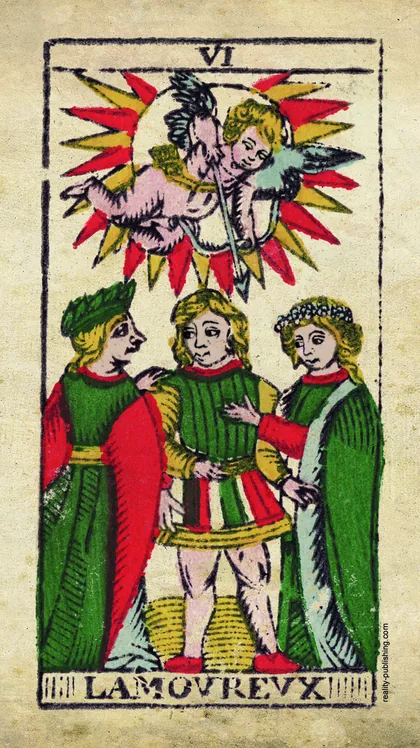
A young figure standing between two others, one placing a hand on the shoulder, the other on the chest; above, a winged Cupid in a radiant sun draws a bow.
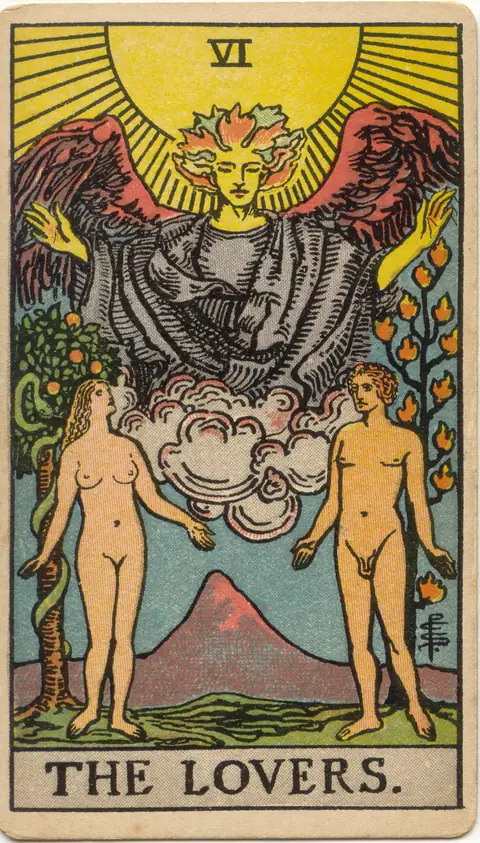
In the Marseille deck, everything plays out in the hands: one on the shoulder, the other on the chest, like two calls pulling in different directions. The figure in the center stays standing, without deciding, while the winged Cupid, in a sun with red and yellow rays, takes aim from above. In Waite’s deck, the scene changes in nature: a naked man and woman stand under an angel with red wings, arms open, in front of a tree of fruit with a serpent coiled around it and a tree of flames, with a mountain in the center. The Marseille drawing therefore shows a hesitation, Waite’s an encounter; the site takes the former as its starting point.
Hands on shoulder and chest (Marseille)
Two hands, two calls: older readings, which Waite reports without following, saw a choice between vice and virtue there.
Winged Cupid and his bow (Marseille)
The arrow comes from above: attraction precedes the decision, and then asks for an answer.
Red and yellow sun (Marseille)
A light overlooking the scene: the choice is made under a gaze wider than one’s own.
The angel with red wings (Rider-Waite)
A great winged figure, arms open, who according to Waite pours his influences over the couple.
The two trees (Rider-Waite)
According to Waite, the tree of life with twelve fruits behind the man, the tree of knowledge with the serpent behind the woman.
The central mountain (Rider-Waite)
A peak rises between the two figures, at the center of the scene.
Two decks
The Lovers, Marseille and Rider-Waite
The same card in the two reference decks: Conver’s drawing, dated 1760, and Pamela Colman Smith’s scene, 1909.
Tarot de Marseille: Nicolas Conver, dated 1760, restored by the Tarot World Project, CC BY-SA 4.0 license, via Wikimedia Commons. Rider-Waite: drawings by Pamela Colman Smith, 1909, public domain, via Wikimedia Commons. Images resized and compressed by Versana; Marseille Minor Arcana diagrams and card back drawn by Versana.
The Lovers: nuances and combinations
In love, depending on your situation
Two situations, two readings: in a current relationship, then in a period without one, and reversed.
In a current relationship
Choosing, in a couple, is replayed constantly: staying, changing pace, opening up more. The card invites you to say which way each of you leans, and to notice that two diverging wishes can still talk to each other.
In a period without a relationship
Between two attractions, two paths, two versions of yourself: the card describes a moment of hesitation. It invites you to listen to what truly calls you, far from the expectations of those around you, before welcoming a new presence.
Reversed
Without a decision, the situation stays blurry, and each assumes what the other feels. The reversed card invites you to name a preference, even a provisional one, rather than let attraction do the work in your place.
Depending on the position in a spread
The position changes the reading: 7 common positions, each upright then reversed.
The situation
The context is one of a choice between two people or two paths: the situation remains open, and its outcome depends on the decision made.Reversed: The choice is put off: the context keeps both options in suspense, and hesitation takes up all the room.
What helps
What helps is looking both options in the face: naming what matters to you, and letting that clarity guide the decision.Reversed: Help requires getting out of hesitation: a simple criterion, a deadline set, and the choice stops weighing on you.
What holds you back
What holds you back is the tug-of-war between two possibilities: as long as the choice is not made, the situation remains suspended on the decision.Reversed: The obstacle sets hard: the postponed choice prolongs the wait, and blocked energy wears itself out in hesitation.
Your way of being
A way of being split between two impulses: weighing, comparing, questioning yourself before committing to a precise direction, whichever it may be.Reversed: An attitude that postpones the decision: the tug-of-war stays inside, between two possibilities you do not dare to settle.
What connects you
Between two people, a bond that raises the question of choice: coming together, committing, or moving apart, depending on what each truly decides to do.Reversed: The bond stays in suspense: the postponed choice leaves each person waiting, with nothing becoming clear.
What is at stake
What is at stake is choosing in harmony with yourself: two paths present themselves, and the outcome depends on the decision made, not on the image itself.Reversed: What remains is to decide without delay: putting it off too long also amounts to deciding, but only by default.
Where it can lead
A clarification could open up: by looking at both options without avoiding them, an owned choice would let you move forward with a clear step, in one direction or the other.Reversed: The opening would wait for the decision: as long as the choice is postponed, the situation could remain suspended.
Which cards it reads well with
Six cards calculated by the combination rules: two that reinforce it, two that nuance it, two in friction. None is “bad.”
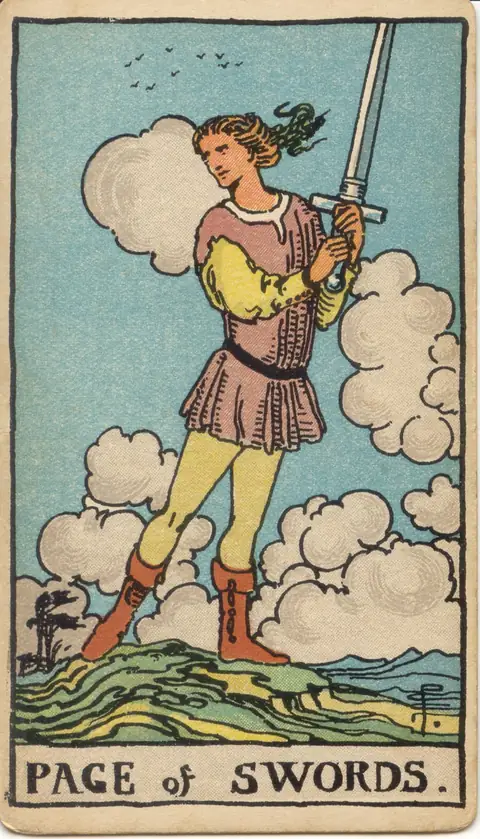
Cards that reinforce itPage of SwordsPage of Swords: tones questioning and transition, elements air and airRead the pair
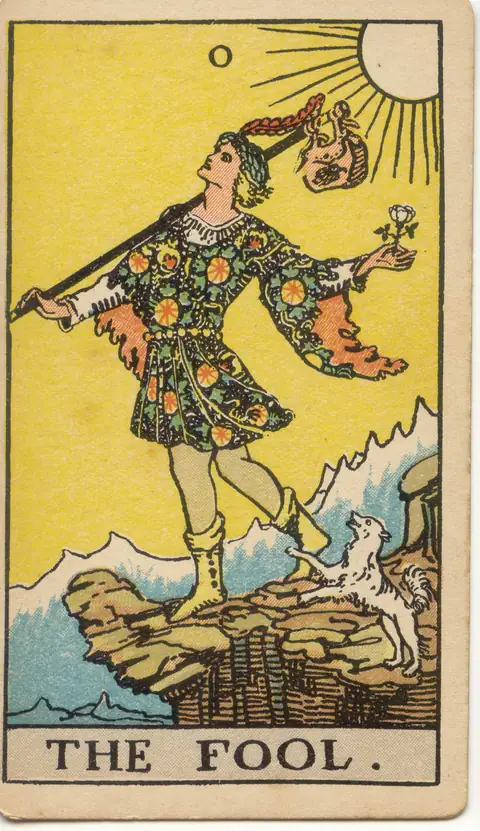
Cards that reinforce itThe FoolThe Fool: tones questioning and transition, elements air and airRead the pair
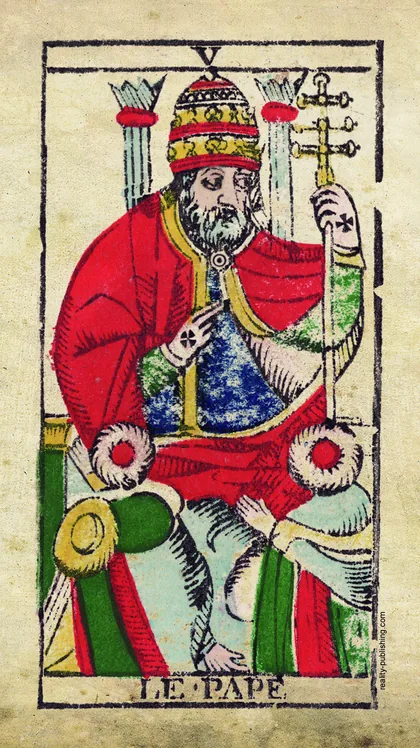
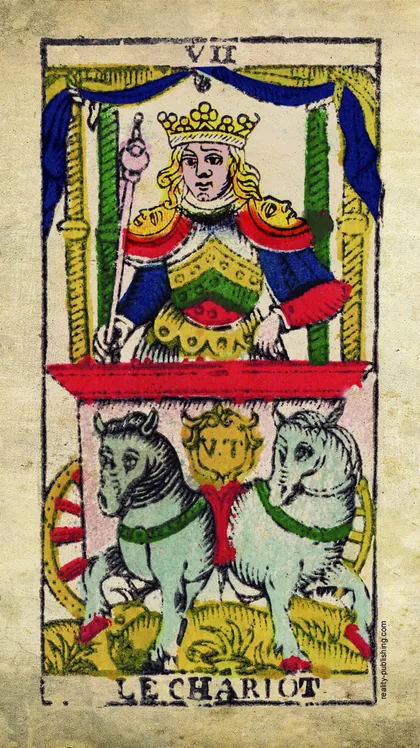
The Lovers is the sixth card of the Major Arcana: after the framework of the Hierophant, the moment when a personal choice has to be made.
Numbered VI, the card follows the Hierophant and precedes the Chariot. The Hierophant gave a received framework; the Lovers asks what you do with it, and toward what you turn by yourself. The Chariot, which follows, shows the drive that comes after the decision. The Marseille deck and Waite’s give the card the same number 6, but not the same scene: a choice with three figures on one side, a couple under an angel on the other. Reduced, the number stays 6.
Tarot birth card and numerology
The Lovers is also the tarot birth card for dates that add up to 6; its reduced number, 6, links it to numerology.
Numbers and names read on Conver’s cards and in Waite’s text; correspondences reported according to the Golden Dawn tradition, never as facts.
Number
VI in the Marseille deck · VI in Waite’s
Name in the Tarot de Marseille
L’Amoureux
Golden Dawn
Gemini, letter Zayin
Hebrew letter
Zayin ז
Sign
Gemini
Reduced number
6
Tendency (yes / no)
Nuanced: Versana’s proposal, to be confirmed
Tone
Questioning: Versana’s proposal, to be confirmed
Sources
Golden Dawn, Book T (The Tarot), published by Israel Regardie in The Golden Dawn
Nicolas Conver (1760), Tarot de Marseille restored by the Tarot World Project
A. E. Waite, The Pictorial Key to the Tarot (1910)
Sefer Yetzirah: three mother letters, seven doubles, twelve simples
Frequently asked questions about The Lovers
What does the Lovers mean in tarot?
The Lovers stands for the choice between two paths, the attraction, and the values it puts to the test. It speaks less of love at first sight than of decision, and is read as an invitation to choose knowingly.
What does the Lovers mean reversed?
Reversed, the Lovers is often read as a postponed choice, an energy that is blocked or turned inward. The reading invites you to identify what holds the decision back, rather than waiting for it to make itself.
Which cards go well with the Lovers?
The Lovers goes with cards of received rule, to set the framework against personal choice, with cards of drive, for what follows a decision, or with cards of balance, to weigh two options calmly. Six associations above detail it.
The Lovers in a yes or no reading?
For a closed question, the tendency is to qualify: the card depends on the choice to be made. It is better to rephrase the question around what you wish, then let the decision take its place.