- The situation
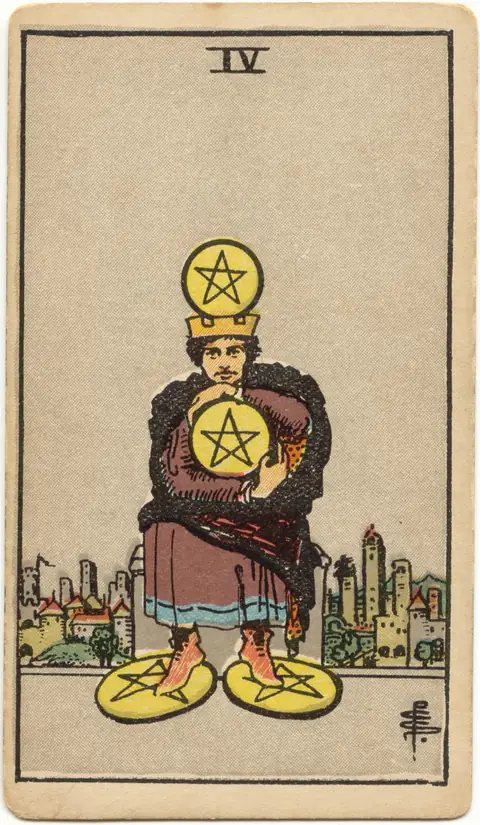
- A held, well-guarded situation, where stability counts above all. The framework reassures, even if it leaves little room for movement, and every expenditure of effort is carefully weighed.Reversed: Stability becomes rigidity: what was meant to protect starts to confine, and the whole goes in circles.
- What helps
- What helps: a stable, well-managed base. Knowing what you own, and keeping a part in reserve, gives the calm needed to decide without haste.Reversed: The support becomes excessive: the reserve no longer reassures, it prevents you from enjoying what it protects.
- What holds you back
- What holds you back: keeping tight hold of what you have, for fear of losing it. Caution protects, but it also prevents you from receiving and exchanging.Reversed: The obstacle tightens: the fear of lacking becomes a way of holding everything back, to the point of stinginess.
- Your way of being
- A cautious, reserved posture: you protect what matters and weigh each expenditure of attention. Constancy reassures, but the door stays only ajar.Reversed: The manner tenses: caution becomes a habit of holding everything back, at the expense of what circulates.
- What connects you
- What connects: a shared need for security. The bond is built on reliability and measure, sometimes with a reserve about giving or asking.Reversed: The bond closes: restraint takes precedence over trust, and each person keeps their coins tight.
- What is at stake
- What is at stake: the balance between keeping and letting circulate. The hope is to feel sheltered, the fear is to see slip away what you built with care.Reversed: The stake is loosening up: recognizing that protection, pushed too far, costs more than it keeps.
- Where it can lead
- A less defensive security could open up. By loosening your grip a little, you might discover that a solid framework also supports exchange very well.Reversed: The opening would come from a gesture of trust: letting go of a small part might show that the rest still holds.