Arcana 2 in a child’s matrix
Calm and very attentive to what surrounds them, this child opens up when they feel safe and are told the truth.
- fine listening
- inner world
- simple truth
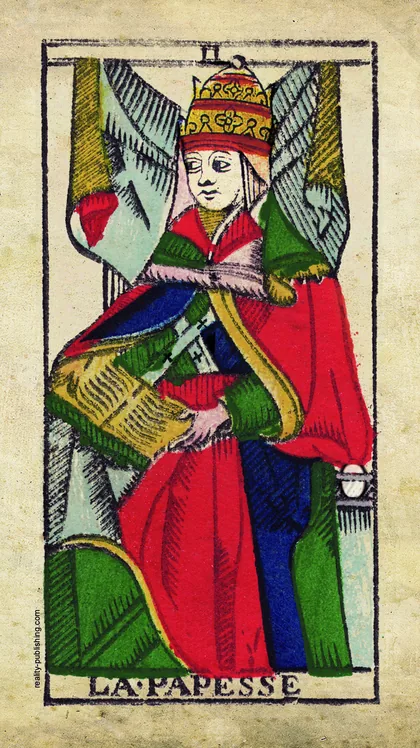
Arcana 2 in a child’s matrix at a glance
Your child picks up what adults leave unsaid: a tiredness, a worry, a playground secret. They remember stories and can watch an insect or a cloud for a long time. This fine attention, when respected, can become real sensitivity to others and a great capacity for reflection.
Silence and pretense are the pitfalls. Hiding an argument, playing down a sadness, claiming everything is fine: your child senses it and worries more about what stays hidden. Also avoid pushing them forward or mocking their shyness, because they would withdraw a little further.
- The card
- II · The High Priestess
- The position
- A child’s matrix
By Thomas Guilhot · updated
Their character
A child marked by the 2 observes a great deal before jumping in.
Calm, dreamy, often shy at first, they pick up on the tensions in the house even when no one talks about them, and may get stomachaches or sleep poorly because of them. They love animals, forts, insects picked up in the garden, stories of fairies and mysteries. They ask astonishing questions about death, the sky, or dreams, and remember everything they are told. They have few friends but keep them for a long time, and they guard their little secrets in a box or a notebook. They need truth, calm, time alone, and a secure bond with their mother. What helps them thrive: nature, books, an animal they care for, and adults who believe them when they say they sense something.
Advice for parents
- Put them in charge of caring for an animal or a corner of the garden
- Explain family tensions simply instead of hiding them
- Respect their secret box and their need for solitude
- Read them tales, myths, and books about nature
- Ask them each evening what they felt during the day
- Encourage them to give their opinion at the table, even timidly
- Suggest a gentle physical activity: dance, swimming, yoga for kids
- Never make fun of their fears or their intuitions
Girl or boy
A girl with the 2 benefits from being encouraged to take her place and express her wishes; a boy benefits from developing boldness, physical effort, and a taste for making decisions, without his sensitivity being mocked.
With others
In class, the 2 child says little but thinks plenty.
They like to sit near the window, watch their classmates, and know everyone’s secrets, because people confide in them easily. Teachers describe them as well-behaved, attentive, sometimes absent or daydreaming, and regret that they do not raise their hand. They do better in writing than orally, and shine in subjects that call for reflection and memory. Their fragile point: they can get drawn into clique stories, repeat a confidence to be accepted, or, on the contrary, silently endure being left out. Help them keep quiet about what is entrusted to them, refuse whispering behind others’ backs, and talk to an adult when a situation troubles them.
In everyday life
Back from school, your child sits in a corner with their notebook and barely answers your questions.
Resist the urge to fire off questions. Offer a calm snack, talk about something else, let some time pass. Often they come over on their own after half an hour, with an unexpected remark about their day. This time apart is their way of settling.
A symbolic reading to better understand a child: never a diagnosis or a label; a childhood professional remains the reference.
Go further
The High Priestess
The card of energy 2Arcana 2 in the portrait
The same energy, in another position of the matrixPortrait 2 and its twelve talents
The same energy, in another position of the matrixArcana 2 in your personal brand
The same energy, in another position of the matrixArcana 2 in the couple matrix
The same energy, in another position of the matrix
How is it calculated?
Nothing changes compared with an adult’s matrix.
Fictional example: a child born on March 14, 2018. The day gives a = 14; the month gives b = 3; the year gives 2 + 0 + 1 + 8 = 11, so c = 11. The lesson d = 14 + 3 + 11 = 28, reduced to 10. The center e = 14 + 3 + 11 + 10 = 38, reduced to 11. Character reads at 14 and 3, the relationship to others at 11.
Frequently asked questions: arcana 2 in a child’s matrix
My child tells me nothing about their day. Is that worrying?
In a quiet child, silence is not an alarm signal in itself: they take time to digest what they went through. Create opportunities rather than interrogations: a car ride, bedtime, drawing side by side. Tell them you are available whenever they wish. If a sadness lingers, talk to the teacher or to a professional.
How should I answer when they ask serious questions?
Answer simply and honestly, with words suited to their age, without avoiding the subject. They prefer a plain answer, even an incomplete one, to a detour that smells like a lie. You can also say: “I don’t know, let’s find out together.” This shows them that one can wonder without being afraid of not knowing.
How can I help them speak up without pushing?
Give them chances to choose on a small scale: the Sunday menu, the order of activities. Value the opinions they state quietly by repeating them in front of others. Gentle-paced activities, such as dance, swimming, or a writing workshop, build confidence in their body. They assert themselves at their own pace, and that is perfectly fine.
A child’s matrix: the 22 energies
Illustrations: Nicolas Conver’s Tarot de Marseille, dated 1760, restored by Tarot World Project, CC BY-SA 4.0 license, via Wikimedia Commons — images resized and compressed by Versana.