Arcana 9 in a child’s matrix
Thoughtful and more mature than they seem, this child thrives in calm, around adults who listen to their questions rather than set them aside.
- calm
- depth
- serious questions
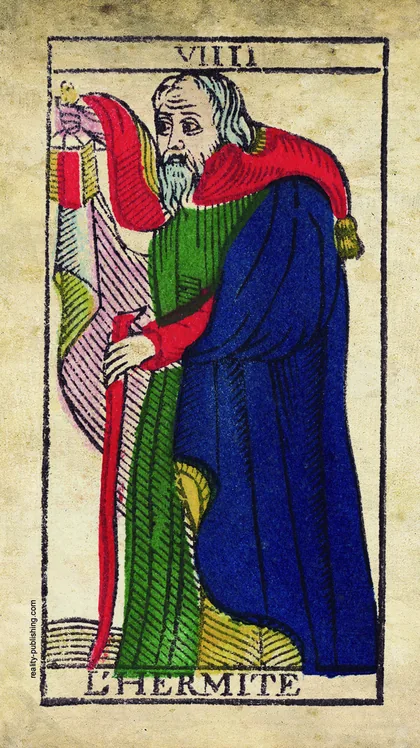
Arcana 9 in a child’s matrix at a glance
Your child goes to the heart of things: they question the meaning of words, watch an anthill for a long time, get passionate about a subject for weeks. They speak little, but what they say matters. This depth, when respected, can become a researcher’s mind and a quiet wisdom.
Mocking their reserve, hurrying them to join the group, or cutting short their questions makes them withdraw further. Also make sure the calm does not hide a sorrow they keep to themselves: a quiet child is not necessarily a serene one. Offer regular chances to say what they carry.
- The card
- IX · The Hermit
- The position
- A child’s matrix
By Thomas Guilhot · updated
Their character
The child who carries the 9 is serious, observant, often more mature than their age.
They ask unexpected questions about death, the sky, the origin of words, and are not satisfied with a vague answer. They can spend hours with a book, a building set, a collection of stones or insects, and do not like noisy birthday parties. They have few friends, but stay attached to them for a long time. Adults sometimes find them distant or cold: in reality, they feel a great deal and show little. They need calm, a corner of their own, honest answers, and adults who take their questions seriously. What helps them thrive: museum visits, science workshops, nature, conversations with a grandparent, and the freedom to go deeper into what fascinates them without being rushed.
Advice for parents
- Answer their questions seriously, or look for the answer together
- Set up a quiet corner for them to read, build, or dream
- Tell them how you overcame a difficulty at their age
- Give them a magnifying glass, a microscope, or a herbarium
- Organize family outings to the forest or the mountains
- Ask them each evening what touched them during the day
- Encourage a chosen friendship rather than demanding popularity
- Never cut short a conversation they struggled to start
With others
In class, the 9 child speaks little but follows everything.
They rarely raise a hand, then surprise the teacher with a fitting remark or a question that goes beyond the curriculum. They prefer working alone and distrust noisy groups; in the schoolyard, they observe before joining a game. They may bond with a classmate who is also reserved, or with the adults at school, the librarian, the science teacher. Their vulnerabilities: a mistrust that keeps them apart, the temptation to think themselves smarter than others, a pain kept to themselves. Support them so they put simple words on what they feel, share what they know without lecturing, and accept others even when they think differently.
In everyday life
For their birthday, your child would rather invite a single friend and spend the afternoon examining pebbles with a magnifying glass than have a big party.
Respect this choice without seeing sadness in it. Make room for a quiet corner, give them time, and in the evening ask what struck them most. They often answer with a sentence that makes you think.
A symbolic reading to better understand a child: never a diagnosis or a label; a childhood professional remains the reference.
Go further
The Hermit
The card of energy 9Arcana 9 in the portrait
The same energy, in another position of the matrixPortrait 9 and its twelve talents
The same energy, in another position of the matrixArcana 9 in your personal brand
The same energy, in another position of the matrixArcana 9 in the couple matrix
The same energy, in another position of the matrix
How is it calculated?
Nothing changes compared with an adult’s matrix.
Fictional example: a child born on March 14, 2018. The day gives a = 14; the month gives b = 3; the year gives 2 + 0 + 1 + 8 = 11, so c = 11. The lesson d = 14 + 3 + 11 = 28, reduced to 10. The center e = 14 + 3 + 11 + 10 = 38, reduced to 11. Character reads at 14 and 3, the relationship to others at 11.
Frequently asked questions: arcana 9 in a child’s matrix
My child has few friends. Should I be concerned?
In a reserved child, one or two loyal friends are often worth more than a crowd. Watch their mood instead: do they come back from a get-together relaxed, do they enjoy telling you about it? If so, let them follow their own rhythm. Make small-group invitations easy, around a shared passion. If a sadness sets in, talk about it calmly with them and with their teacher.
How can I answer their big questions without misleading them?
Say what you know in simple words, and what you do not know, frankly. Then look together in a book, on a visit, or by meeting someone who knows the subject. They feel respected when you take the question seriously, even if the answer stays open. These exchanges build lasting trust between you.
How can I keep them from cutting themselves off from others?
Offer gentle bridges between their world and others’: a workshop around their passion, an activity for two rather than a big group, an expert role in a class project. Compliment them when they share their knowledge with others, without lecturing. They gradually discover that their discoveries are better for being told.
A child’s matrix: the 22 energies
Illustrations: Nicolas Conver’s Tarot de Marseille, dated 1760, restored by Tarot World Project, CC BY-SA 4.0 license, via Wikimedia Commons — images resized and compressed by Versana.