Arcana 10 in a child’s matrix
Curious, sociable, and quickly at ease anywhere, this child needs freedom within limits and adults who trust them.
- curiosity
- change
- trust
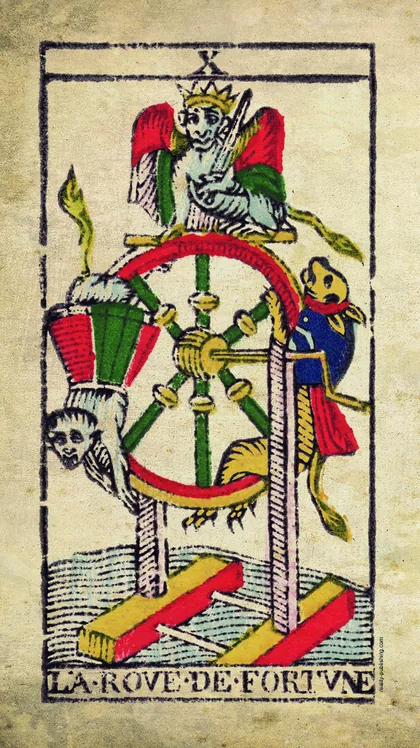
Arcana 10 in a child’s matrix at a glance
Your child makes friends on the train as at the pool, adapts to a new setting within days, and finds play in the slightest surprise. Their flexibility is a real asset. Kept up by varied experiences, it can become an ease in adjusting and bouncing back.
Days timed to the minute, constant supervision, or worried talk about money within earshot put them out. Watch out for the sentence “you’re just unlucky” after a failure: they might come to believe their efforts change nothing. Always link the result to what they did.
- The card
- X · Wheel of Fortune
- The position
- A child’s matrix
By Thomas Guilhot · updated
Their character
A child carrying the 10 is curious, restless, full of zest, and asks questions about everything they come across.
They love outings, car rides, games of chance like board-game races or card battles, and surprises hidden in a package. They adapt quickly to a new home or a new school and make friends everywhere. But they tolerate confinement poorly: a minute-by-minute schedule, adults who control every moment, or a distrustful atmosphere dims them and makes them anxious. They may then become agitated or, on the contrary, give up and stop trying anything. They need structured freedom, daily movement, and adults who believe in life’s good surprises. What helps them flourish: travel, varied activities, and the trust placed in them to carry out their own small projects.
Advice for parents
- Tell them true stories of luck and happy coincidences
- Enter a raffle or a drawing contest with them
- Leave them free time every day, with no planned activity
- Give them a small budget and let them own their choices
- Take them to discover a new place every month
- Avoid talking anxiously about money troubles in front of them
- Sign them up for an outdoor or movement sport
With others
At school, the 10 child makes friends easily and quickly knows everyone, from the older kids on the playground to the cafeteria staff.
They like field trips, group work, and team games, and are often the life of the party. Teachers describe them as lively, sociable, sometimes distracted and inconsistent: they start a presentation well, then lose interest. They learn better by moving, through play or hands-on handling, than by sitting for a long time. Their vulnerabilities show up in the face of failure: a bad grade can make them believe they are “out of luck” and that trying is pointless. Help them see their tasks through to the end, connect their effort to their results, and see a flop as just one more step.
In everyday life
A poor dictation grade comes home in your child’s school bag.
They shrug: “I’m just unlucky anyway.” Rather than comfort them with fate, look at the paper with them and spot what worked. Suggest a little practice of five minutes a day. At the next dictation, point out the progress, even if modest.
A symbolic reading to better understand a child: never a diagnosis or a label; a childhood professional remains the reference.
Go further
Wheel of Fortune
The card of energy 10Arcana 10 in the portrait
The same energy, in another position of the matrixPortrait 10 and its twelve talents
The same energy, in another position of the matrixArcana 10 in your personal brand
The same energy, in another position of the matrixArcana 10 in the couple matrix
The same energy, in another position of the matrix
How is it calculated?
Nothing changes compared with an adult’s matrix.
Fictional example: a child born on March 14, 2018. The day gives a = 14; the month gives b = 3; the year gives 2 + 0 + 1 + 8 = 11, so c = 11. The lesson d = 14 + 3 + 11 = 28, reduced to 10. The center e = 14 + 3 + 11 + 10 = 38, reduced to 11. Character reads at 14 and 3, the relationship to others at 11.
Frequently asked questions: arcana 10 in a child’s matrix
My child quickly tires of an activity. Should I insist?
First let them try several things: this energy learns through variety. Then ask for a short, clear commitment, for example until the holidays, before deciding whether to continue. Help them see what they gained, even if they stop. They learn to choose with full knowledge rather than flee at the first obstacle.
How can I show them that their efforts count?
Tell stories of successes that took time: a bike ride learned after several falls, a drawing started over. Note down with them what they did to succeed at something. Avoid attributing successes to luck or a gift. They then grasp that their actions matter, which protects them from discouragement.
How can I reassure them about changing schools?
They often adapt well, but need to know what stays the same: their family, their rituals, their belongings. Visit the new place with them, talk about it positively without playing down their doubts, and keep in touch with old friends. Tell them you support them through this passage and that you trust them.
A child’s matrix: the 22 energies
Illustrations: Nicolas Conver’s Tarot de Marseille, dated 1760, restored by Tarot World Project, CC BY-SA 4.0 license, via Wikimedia Commons — images resized and compressed by Versana.