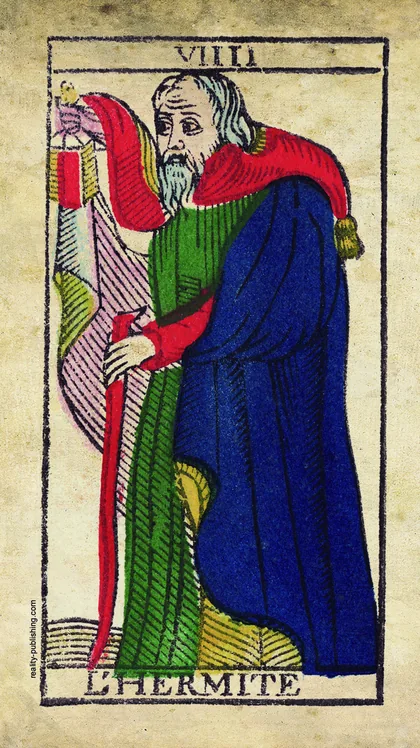
The Hermit is an old bearded man draped in a hooded cloak.
He walks leaning on a staff and holds a lantern in front of him, half veiled by a fold of his cloak. Nothing hurries him. Nor is he running from anyone: he simply walks, at his own pace. The lantern lights little, but enough to place the next foot.
This is the underlying trait of this card: you do not look for the complete vision, you advance in stages, keeping the light at human height. It is often lived as a curiosity for what lasts: books, a trade learned over a long time, a subject studied for years. The Hermit is not a hermit in the strict sense. He knows the world, and that is exactly why he knows how to withdraw from it for a while. Those close to him often notice that advice from him comes late, but that it has been weighed, checked, and holds over time.
As a birth card, the Hermit suggests a person who needs distance to understand what they are living. After a packed week, they set aside an evening for themselves; before an important choice, they withdraw to order their thoughts, then return with a considered view. What this card offers is chosen solitude, which then nourishes others.
The Hermit: strengths and points of attention
Its strengths
Attentive listening, with no rush to conclude.
An aptitude for learning over the long haul, with no need for an audience. And quiet reliability: the people around you know that advice from you has been thought through. Finally, a taste for passing things on: what you have understood, you know how to explain simply, one evening, to someone who is searching.
What needs attention
By withdrawing too much, we leave loved ones without news and they take our silence for indifference.
The need to understand can also delay action: we wait to be sure, though certainty never fully arrives. A meeting set in advance, with a person who matters, helps you stay connected.
The Hermit in love, at work, and with money
In a relationship
This figure loves deeply and quietly.
It needs its retreats to be respected: an evening of reading, a solitary Sunday walk. In return, it offers full attention when present, and conversations that go far. The other person may mistake its silences for distance.
At work
The Hermit works well without spectators.
Research, expertise, archives, craftsmanship, consulting: wherever knowledge builds up slowly, he finds his place. People come to consult him when the problem is thorny. Endless meetings and constant urgency wear him down; a quiet office and realistic deadlines restore his full precision.
With money
Frugal by taste more than by necessity, this figure spends little to impress and gladly spends to learn: books, a course, a good tool.
It saves without thinking about it and distrusts impulse purchases. Negotiating is a burden; it prefers to research at length, compare, then pay the fair price without argument.
Portraits to recognize yourself in, not forecasts: the birth card says nothing about what will come.
The Hermit: advice, number, and traditions
With The Hermit: something to try this week
Block out two hours this week, with no screens and no interruptions, for a question you keep putting off.
Write down only the first step, not the solution. Then talk about it with someone.
Card 9 and the number 9
Arcana 9 corresponds to the 9 of numerology: the last of the single digits, turned toward ideals and generosity.
Applied to the life path, it suggests a road that learns by observing, then gives back what it has understood to those who come after, without expecting thanks. In other words, the Hermit is a 9 that has understood that looking far starts with looking accurately.
Your talent is to illuminate: to make clear what was confused, to fetch the essential from beneath appearances. It shows when a friend finally finds the solution after an hour of conversation with you, when a complicated file becomes readable on one page, when a student finally grasps a notion that was resisting them. It is exercised in teaching, research, one-on-one advising, writing in-depth books, psychological support, and caregiving and health professions. To cultivate it, read varied and contradictory sources, keep a journal of your reflections, and regularly test your ideas before an audience: a class, a workshop, a reading group.
Your birth cards, according to tradition
The birth card tradition, passed down by Angeles Arrien and then popularized by Mary K. Greer, makes the Hermit a soul card.
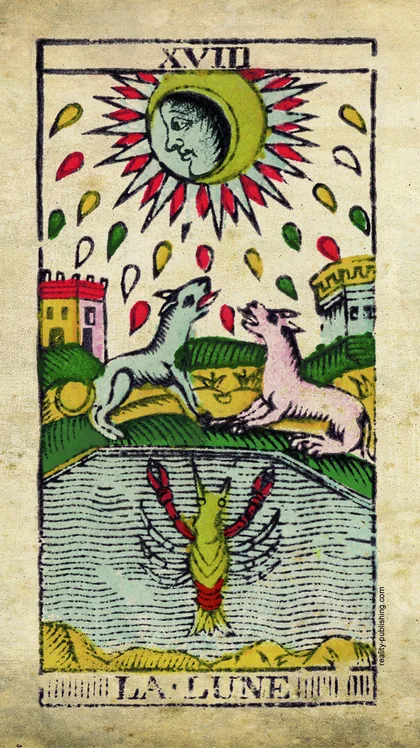
He pairs with the Moon, the personality card for dates that total 18: beneath dreams and nighttime reflections, a lantern looking for meaning.
The Hermit in two decks
On card IX of Conver’s Marseille tarot (1760), the Hermit advances leaning on a staff, his lantern half hidden by a fold of his cloak.
The Rider-Waite, published in London in 1909 by William Rider & Son, keeps the name and the number, The Hermit, but sets him on a snowy summit and places a six-pointed star inside his lantern.
Day + month + year, reduced while the total is above 22 → 9.
Is this really your birth card?
The Hermit, soul card
Total 18XVIII · The Moon
Soul cardIX · The Hermit
1 + 8 = 9
A tradition passed on by Angeles Arrien and popularized by Mary K. Greer, an American author of books on tarot.
Frequently asked questions about The Hermit
What does tarot birth card 9 mean?
Birth card 9, the Hermit, shows a walker lighting their way with a lantern. It suggests a need for distance, a curiosity taken all the way to the bottom of subjects, and patience in learning. It does not say you must live alone: it speaks of chosen solitude, which serves to return to others better.
Which birth date gives tarot birth card 9?
With May 14, 1979, the addition gives 14 + 5 + 1979 = 1998, then 1 + 9 + 9 + 8 = 27, then 2 + 7 = 9. The Hermit comes up roughly once in twelve births since 1940: it is among the common cards, without being the most frequent.
How do birth card 9 and life path 9 relate?
The birth card and the life path start from the same total. Here, no reduction changes the result: 9 stays 9. The life path describes the experience of a road, the card offers its image: the walker with the lantern illustrates the 9 that observes, learns, then gives what it has understood.
Does the Hermit mean living alone?
No. The card suggests a need for time to yourself, not a rejection of others. The Hermit carries a lantern that others can follow: his retreat serves what he passes on afterward. Many people with this card live in couples, in families, surrounded by others, with the only requirement of regular moments of distance.
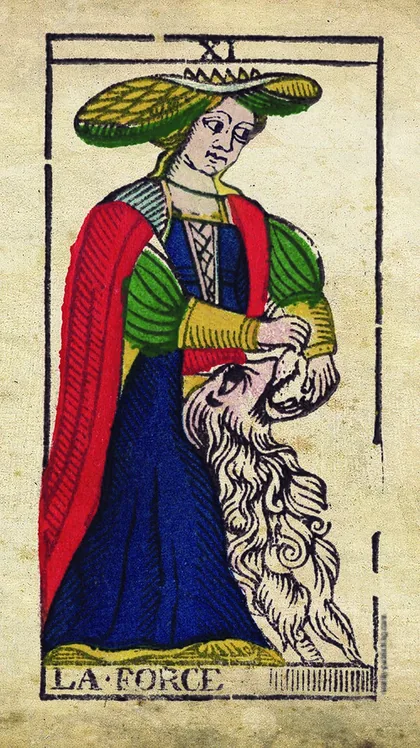
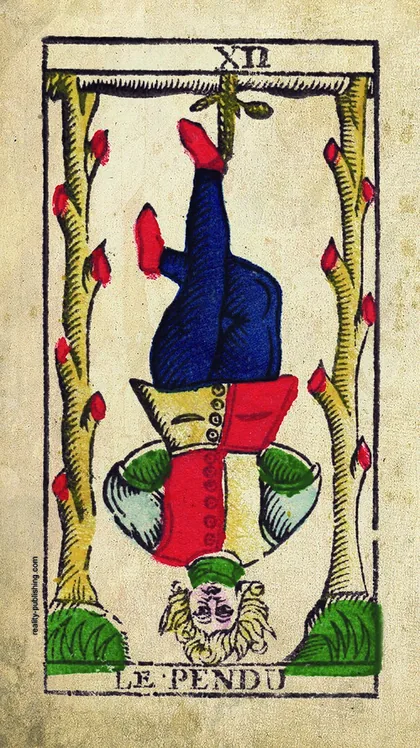
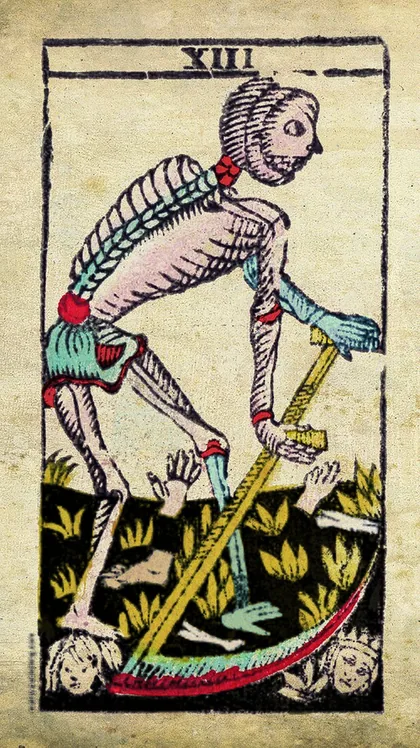
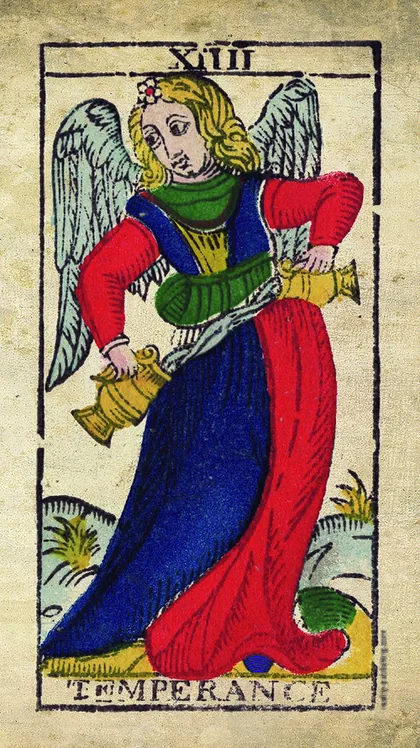
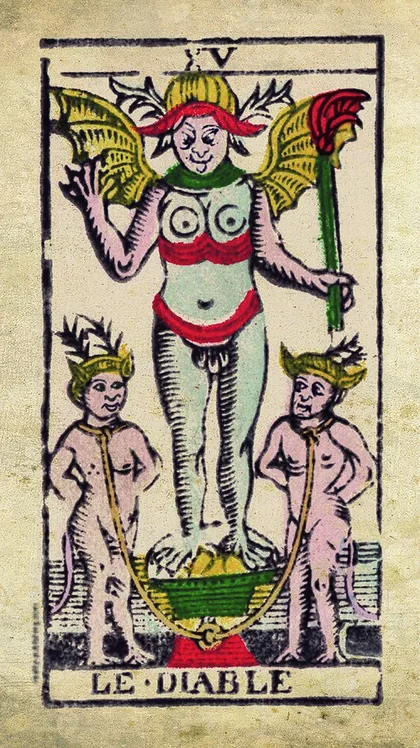
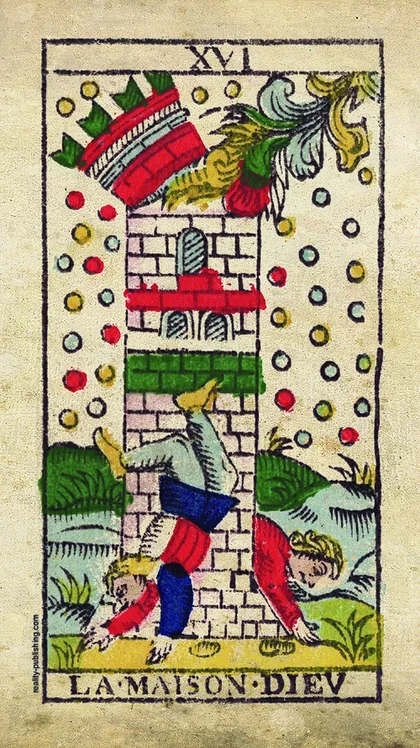
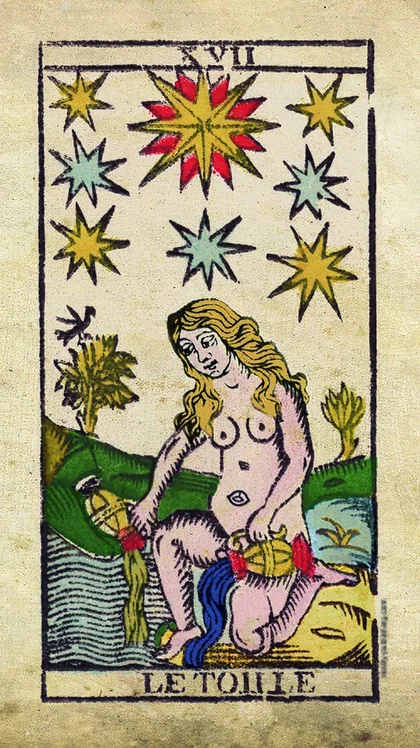
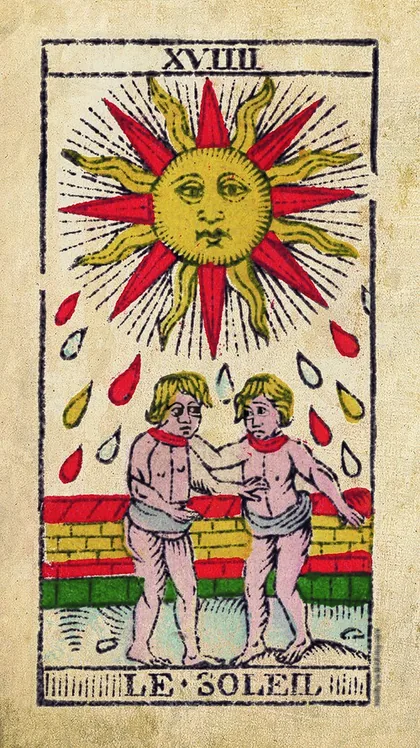
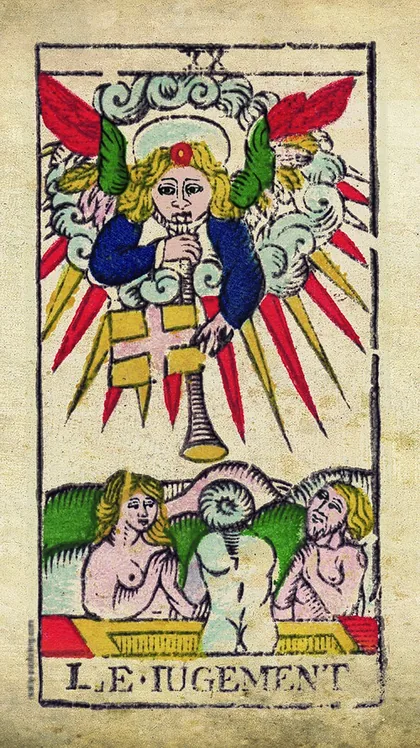
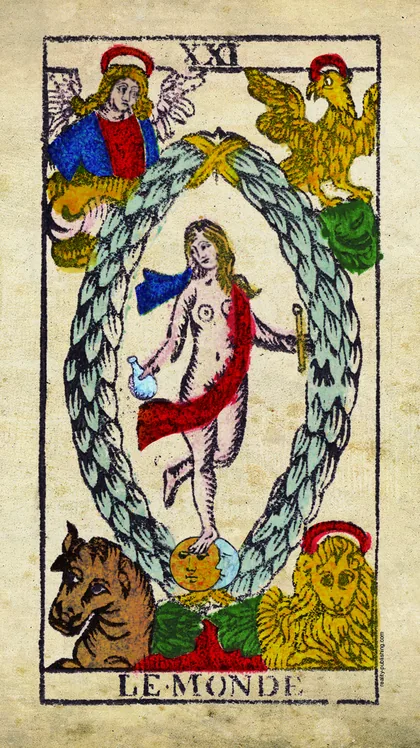
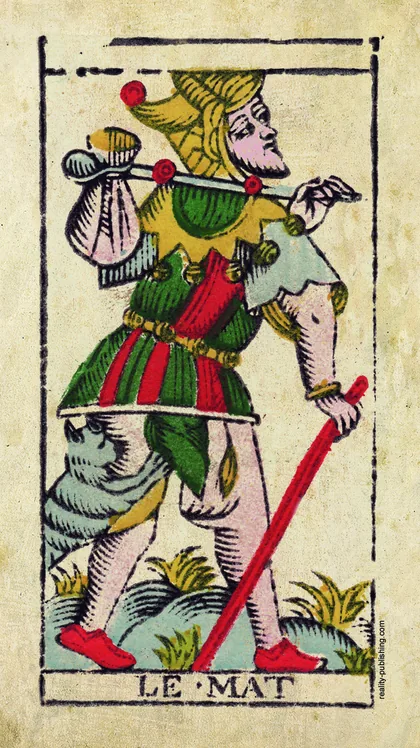
Illustrations: Nicolas Conver’s Tarot de Marseille, dated 1760, restored by Tarot World Project, CC BY-SA 4.0 license, via Wikimedia Commons — images resized and compressed by Versana.