As a birth card, the card describes a relationship to existence founded on structure.
You recognize someone who wants to know what they stand on: a clear budget, a schedule kept, an organization that does not shift with every wind. They inspire trust because they arrive on time and do what they said.
This figure also tells of the power to decide. The Emperor settles matters, sets rules, protects what is under his responsibility. You see him, day to day, as a landmark in the family or on a team, the one to whom the key, the file, or the common fund is naturally handed.
The image poses a useful question: does what you have built protect you, or hold you back from going elsewhere? A good frame leaves room for windows.
Look, in your life, at what you built without anyone asking: a filing system, a budget, a family tradition. That is the substance of this card, a quiet know-how that others appreciate without always noticing it.
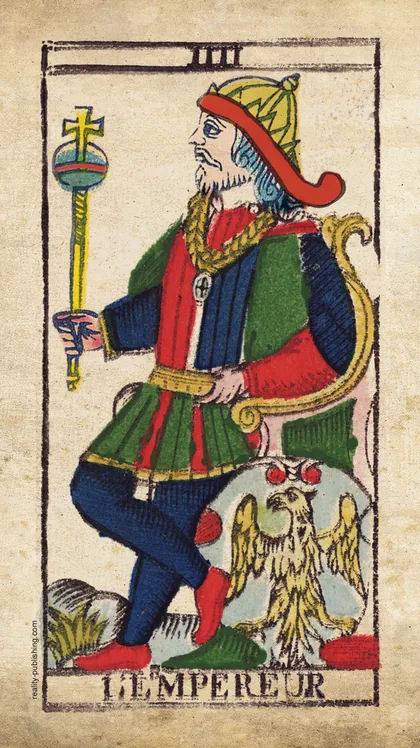
The Emperor (L’Empereur) sits in profile on a massive seat, almost a block. He holds a scepter topped with a globe, and his eagle shield rests at his feet. The crossed legs give him an air of ease, but his posture stays firm, that of someone guarding a territory.
The Emperor: strengths and points of attention
Its strengths
He helps carry a long project, make a hard decision without trembling, and give others a framework that reassures them.
Add the loyalty of someone who keeps their word and the solidity of decisions made once and for all. On a team, you know the file entrusted to the Emperor will be handled to the end.
What needs attention
He can also lock tenderness behind duty and seem harsher than he is, lack flexibility in the face of the unexpected, take others’ improvisation for carelessness, and leave little room for play, fantasy, and the mistake that teaches.
The Emperor in love, at work, and with money
In a relationship
Faithful and protective, the Emperor likes to offer a safe framework: stable housing, dated plans, a kept word.
You can count on him on hard days. He shows his attachment by fixing, organizing, keeping his commitments, and he sometimes decides for two without consulting.
At work
Workshop manager, administrator, site or department head: the Emperor naturally takes charge of an organization.
He sets procedures, assigns roles, and meets deadlines. His efficiency reassures; his difficulty is delegating without rechecking everything behind others.
With money
For this figure, money is to be put in order, counted, and protected.
It builds regular savings, knows its expenses to the penny, and prefers a lasting purchase to a passing one. Its rigor has a price: little room for pleasure spending, and tension when the unexpected disrupts the picture.
Portraits to recognize yourself in, not forecasts: the birth card says nothing about what will come.
The Emperor: advice, number, and traditions
With The Emperor: something to try this week
Choose one habit that serves you and one pointless rule: keep the first, drop the second.
A single rule changed is enough to test.
Card 4 and the number 4
Number 4 in numerology stands for the art of building with method and regularity: foundations before the roof.
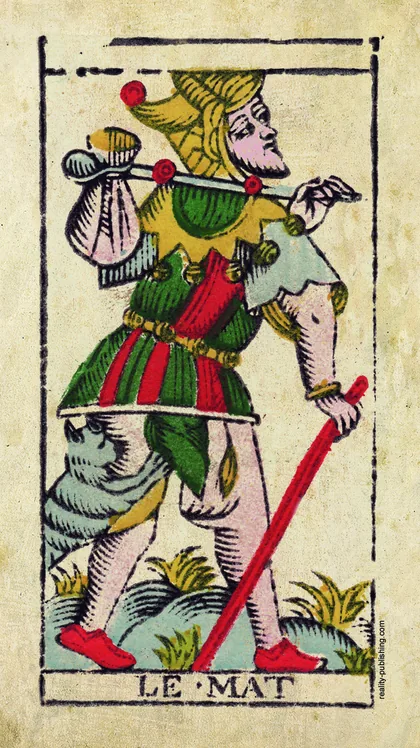
A life path number 4 recognizes this taste for the concrete in the card. The Fool, numbered 22, also reduces to 4, which unites two opposite images. Where the Fool steps outside frameworks, the Emperor builds them: the 4 contains both temptations.
Your talent is giving structure to what has none. It shows when a disorganized association regains a clear budget after you pass through, when a scattered family agrees on a calendar thanks to you, when a vague project becomes a series of dated steps. It is put to use in running a company or a department, managing construction works, financial management, logistics, starting a business, and organizing large events. To cultivate it, take on growing responsibilities, train in management and negotiation, and learn to delegate: a builder who does everything alone only builds small houses.
Your birth cards, according to tradition
For Angeles Arrien and Mary K. Greer, the Emperor is a soul card.
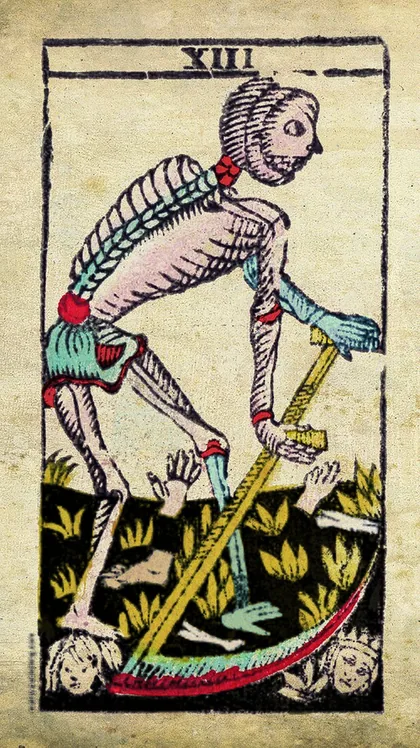
He stands behind Death (13, the nameless arcana), which cuts through, and behind the Fool (22), which Greer numbers 0: the three cards form for her a single “constellation,” that of the 4: the walker and the builder, two faces of the same impulse.
The Emperor in two decks
On the Conver card, the Emperor appears in profile, legs crossed, his eagle shield set on the ground.
The Rider-Waite, published in December 1909, turns him: “The Emperor” looks out front, seated on a stone throne decorated with ram’s heads, with mountains behind him. The ease of the profile gives way to a frontal pose.
Day + month + year, reduced while the total is above 22 → 4.
Is this really your birth card?
The Emperor, soul card
Total 13XIII · Death
Total 22XXII · The Fool
Soul cardIV · The Emperor
1 + 3 = 4; 2 + 2 = 4
A tradition passed on by Angeles Arrien and popularized by Mary K. Greer, an American author of books on tarot.
Frequently asked questions about The Emperor
What does tarot birth card 4 mean?
The Emperor symbolizes structure, stability, and quiet authority. As a birth card, the Emperor portrays a reliable person, who builds patiently and protects what they are in charge of. The massive throne and the globe-topped scepter are his emblems.
Which date gives birth card 4?
Totals of 2002, 2011, and 2020 lead to it, notably. Someone born on October 5, 1987 gets 2002, whose digits make 4. Since 4 is below 22, the calculation stops there, and you move on to reading the image.
Card 4 and life path number 4: what is the link?
They share a taste for foundations, organization, and perseverance. The Emperor offers the imposing face of it, life path number 4 the everyday version: keeping your commitments, week after week. With life path number 4, he also shares a certain slowness to change his mind.
Is card 4 linked to 22, the Fool?
Yes, through numerology: 22 reduces to 4. The Fool, a free figure without ties, then contrasts with the rooted Emperor. Some see in them two faces of one number, the idea and its realization. The two cards are in dialogue: one sets a frame, the other overflows it.
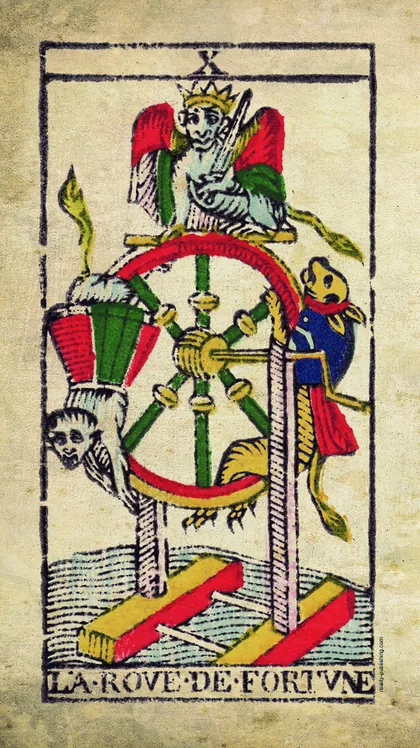
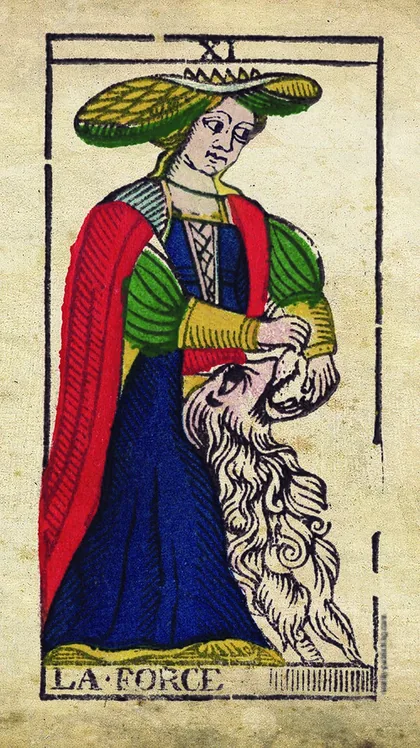
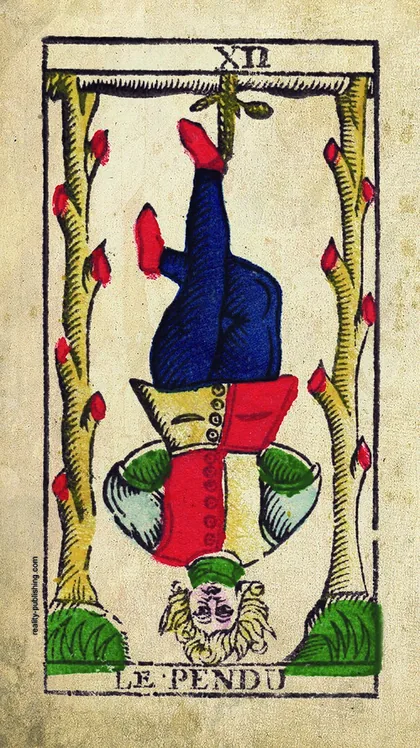
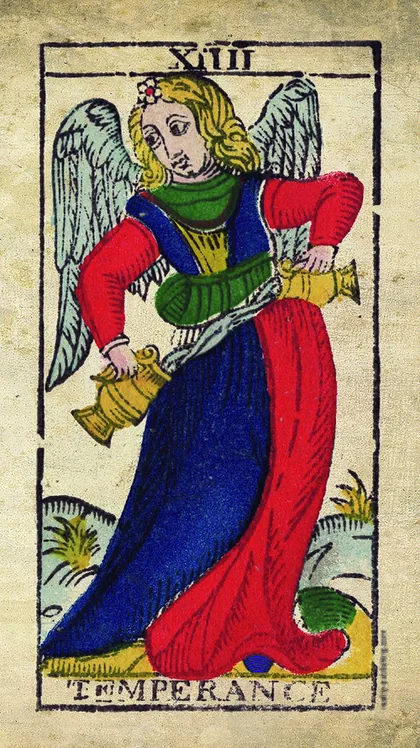
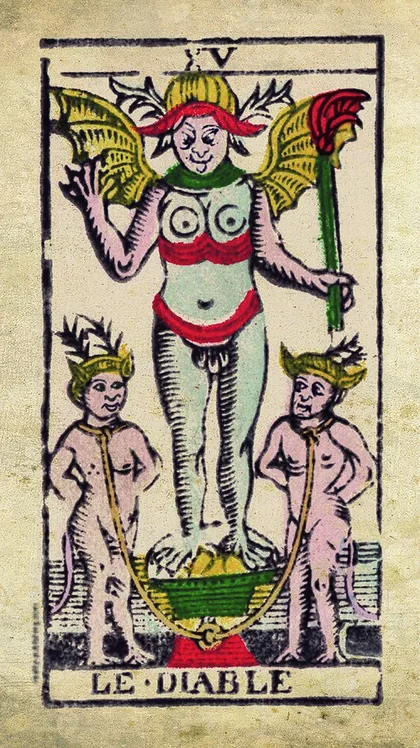
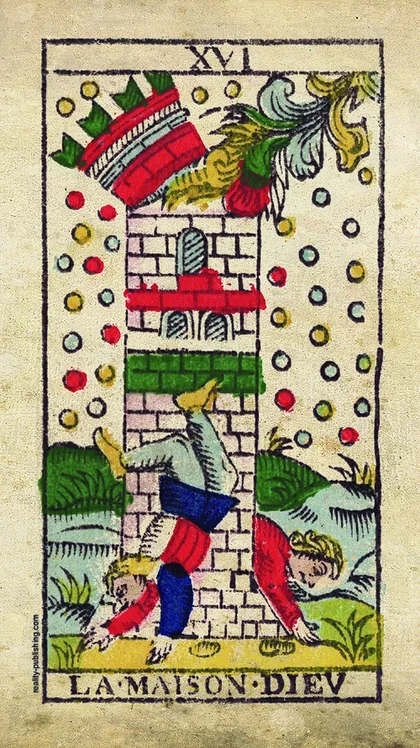
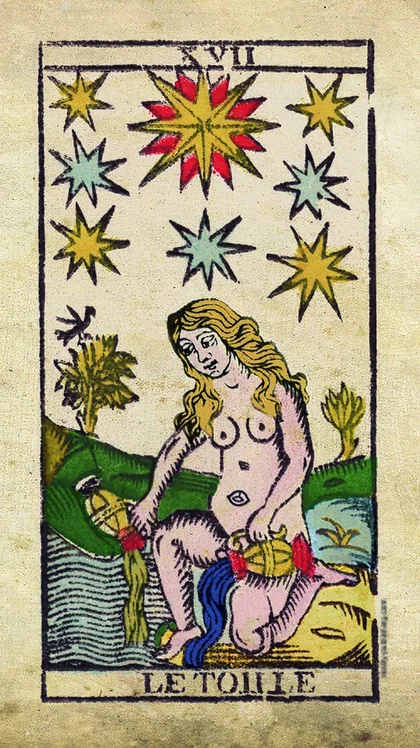
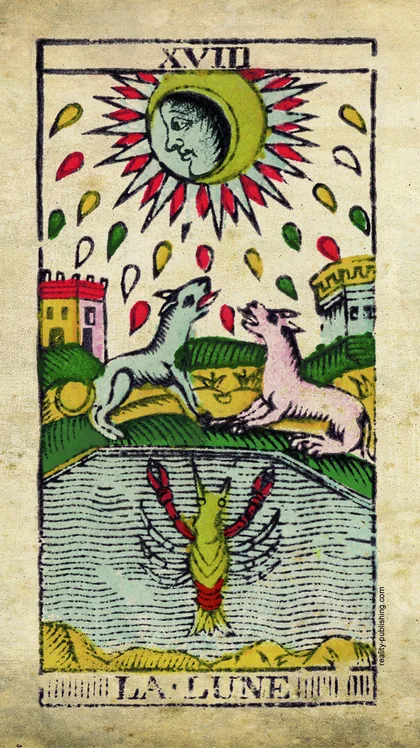
Illustrations: Nicolas Conver’s Tarot de Marseille, dated 1760, restored by Tarot World Project, CC BY-SA 4.0 license, via Wikimedia Commons — images resized and compressed by Versana.