- The situation
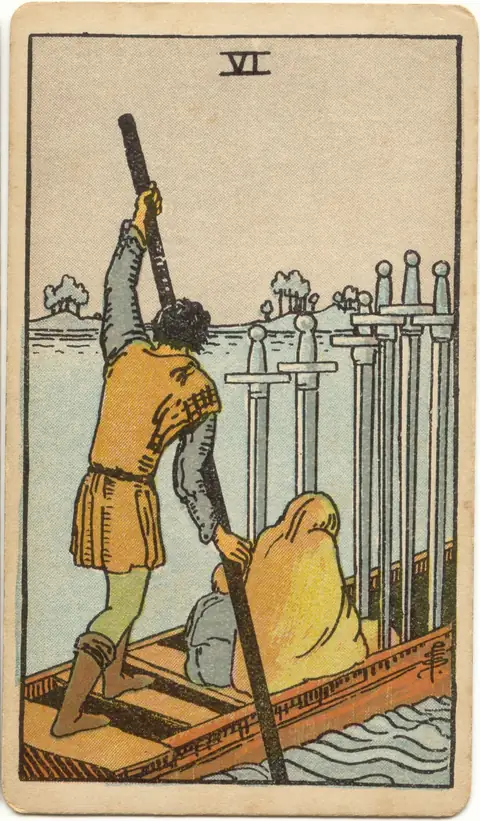
- The period is one of passage: you leave a turbulent moment behind to reach quieter waters, at your own pace and without hurrying.Reversed: The hand stays on the turbulent shore: departure is delayed, and what was meant to be left keeps weighing a little.
- What helps
- What helps: agreeing to gently leave a worn-out situation, trusting the movement, and keeping only what is essential in your own baggage.Reversed: Support is still in preparation: clarifying what holds you back and setting a first small step would make departure simpler.
- What holds you back
- What holds you back: the baggage of the past. If you take everything with you, the crossing stays heavy and calm is slow to arrive.Reversed: The obstacle comes from a delayed departure: you stay on the turbulent shore, held back by habit or fear of the unknown.
- Your way of being
- A stance that already looks toward the far shore: you move steadily, take what is essential, and leave behind what was in the way, without regret.Reversed: A way of being that hesitates to weigh anchor: you wait, hold on to your things, and departure is put off day after day.
- What connects you
- Between you, a passage toward more calm is taking shape: taking a little distance can help you find a quieter understanding again.Reversed: The bond stays in turmoil: the departure toward more serene exchanges is slow, each person hoping for a first move from the other side.
- What is at stake
- What is at play: agreeing to pass from a difficult moment to a calmer one, quietly letting the shore behind you drift away.Reversed: What is at stake is deciding to leave: setting a course, however modest, rather than staying on a shore that stirs you up.
- Where it can lead
- Calmer waters could open up: the crossing would lead to a more peaceful place, where you can catch your breath, reflect, and choose what comes next without haste.Reversed: A departure could eventually take shape: by gently preparing the crossing, the turbulent shore would drift away in turn.