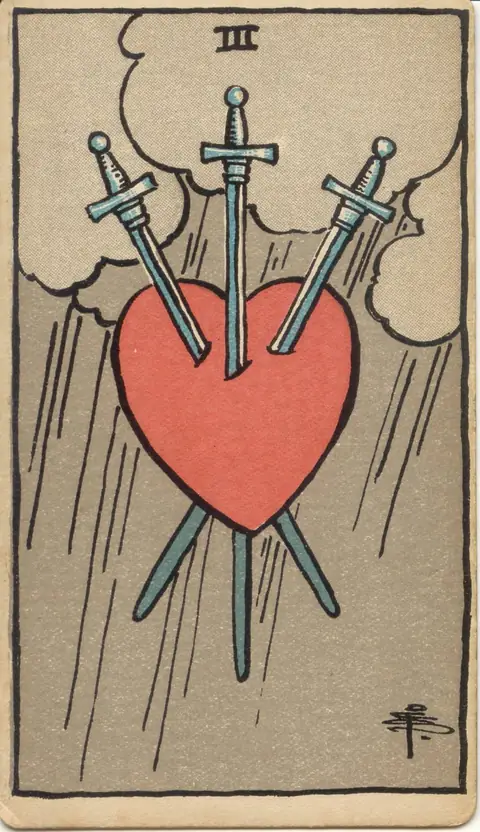
- The situation
- The situation invites withdrawal: you step back a little to listen to what is lived inwardly, in a calm where emotions find their space.Reversed: You come from an overflow: other people’s emotions have mixed with your own, and the situation has become loaded with what was not yours.
- What helps
- Calm listening can be supportive. A simple approach: let a few breaths pass before responding, so that emotions can settle first.Reversed: Support becomes blurred: by absorbing other people’s emotions, listening loses its clarity, and a little distance becomes necessary again.
- What holds you back
- Withdrawal can become a retreat that lasts too long: inner listening slows down if it is never shared, even through a few simple words.Reversed: Emotional overflow holds you back: without a boundary, other people’s feelings cover your own, and it is hard to act on your own behalf.
- Your way of being
- An inward, attentive way of being: you listen, feel finely, and offer a calm space where everyone can speak.Reversed: A way of letting yourself be overwhelmed: you absorb other people’s feelings until you can no longer sort out which are yours.
- What connects you
- The bond is lived through listening: you stay close without intruding, and emotions are expressed gently, in a calm that gradually reassures.Reversed: The bond becomes a sounding board: the other person’s emotions flood in, and you lose sight of what you yourself feel.
- What is at stake
- What is at stake is welcoming your own emotions and those of others without getting lost in them. The hope of true listening sits alongside the fear of being overwhelmed by too much of it.Reversed: Finding where your own emotions end and where others’ begin: that is what is at play when the overflow threatens.
- Where it can lead
- A space for listening could open up, where emotions would be welcomed without being endured, in a withdrawal that nourishes rather than isolates.Reversed: The opening would come through a clearer boundary: as long as other people’s emotions spill over onto your own, listening stays confused.