Cups in tarot: the 14 cards and their meaning
Cups are the suit of feelings: love, friendship, and everything that is felt, shared, and received.
- feelings
- bonds
- welcome
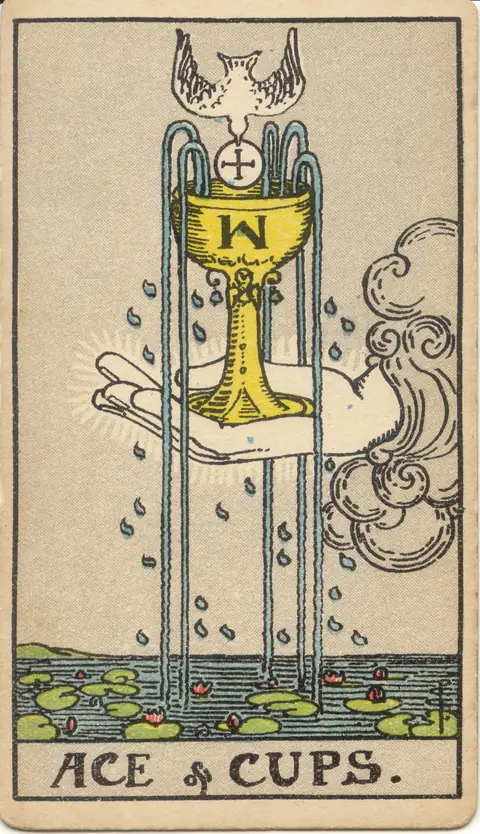
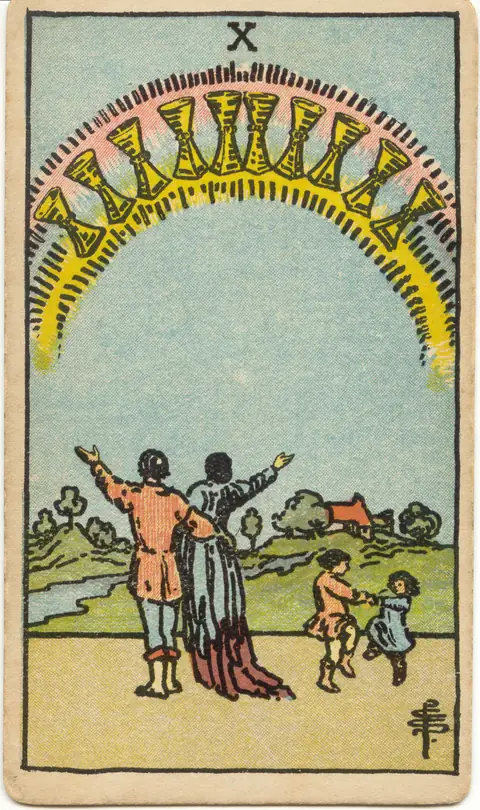
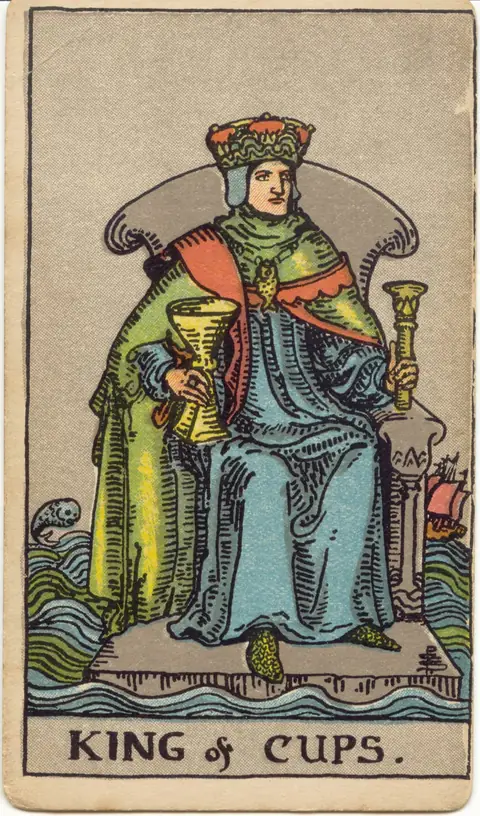
Cups at a glance
When cups dominate a spread, the question touches the heart: a feeling, a relationship, or a shared hope.
- Element
- Water
- Domain
- Emotions, bonds, and openness
- Rider-Waite
- Cups
- Cards
- 10 numbered, 4 court cards
By Thomas Guilhot · updated
Cups in a reading
Many cards from the suit
A rain of cups in the spread often puts what is felt in the foreground: relationships, attachments, what moves you. It invites you to ask which feeling is looking for its place, without deciding for you.
A single card from the suit
A single cup acts like a drop of water in the reading: a bond, an emotion, a gesture of welcome, whose meaning becomes clearer from the place it occupies and its neighbors.
With the Major Arcana
Paired with a Major Arcana, a cup gives it a sensitive face: it shows how the grand theme is lived from the inside, in an exchange, a memory, or a wish to draw closer.
The progression from 1 to 10
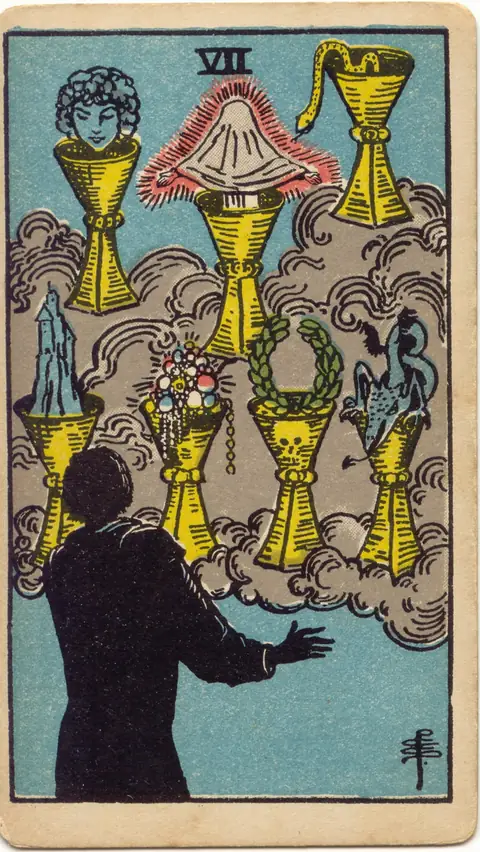
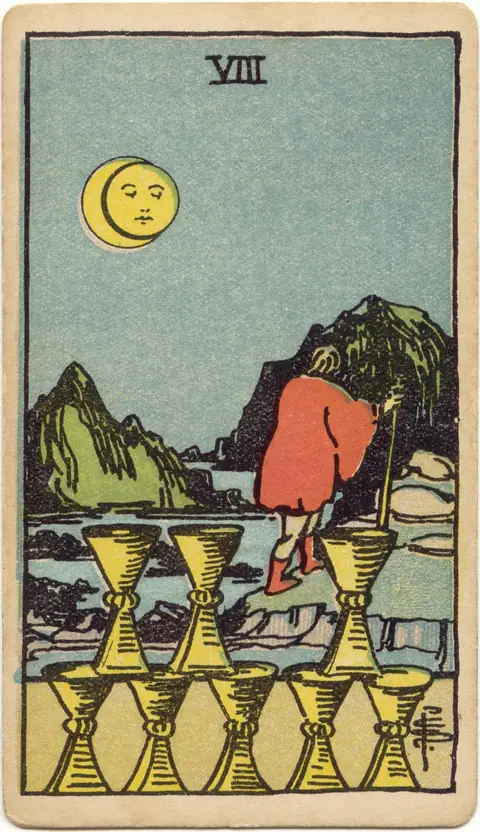
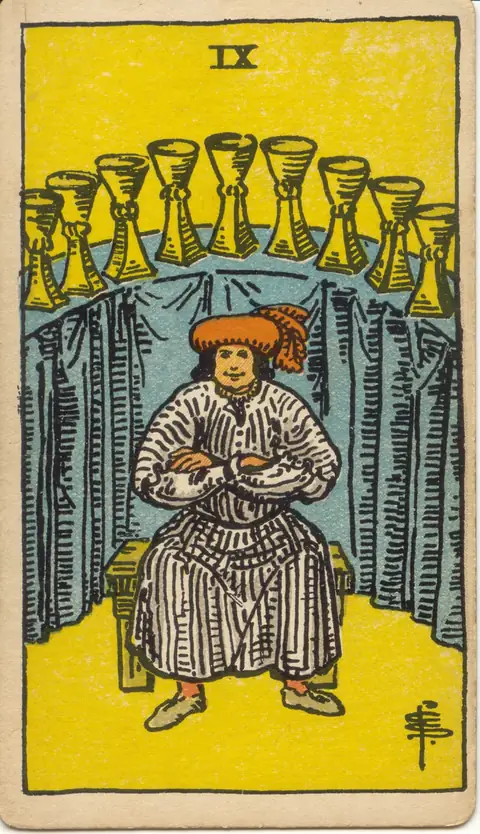
The ace offers the full cup, the following cards make it circulate, spill, or empty, and the ten shows it overflowing: a progression from feeling to what it builds with others.
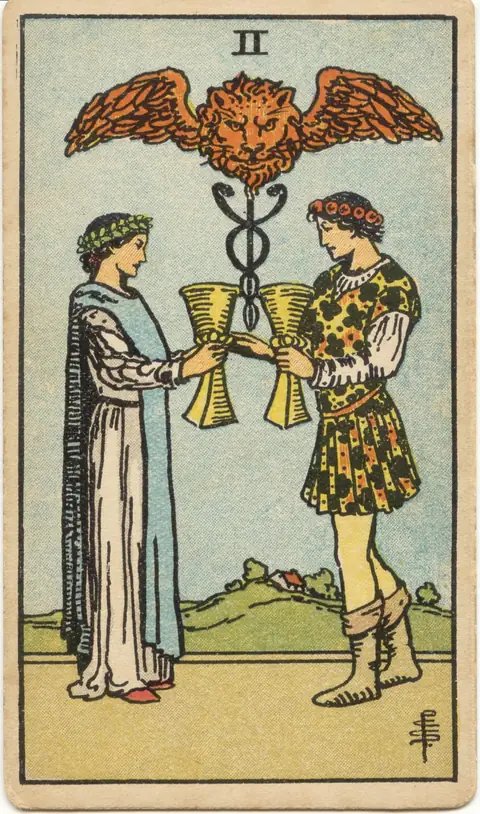
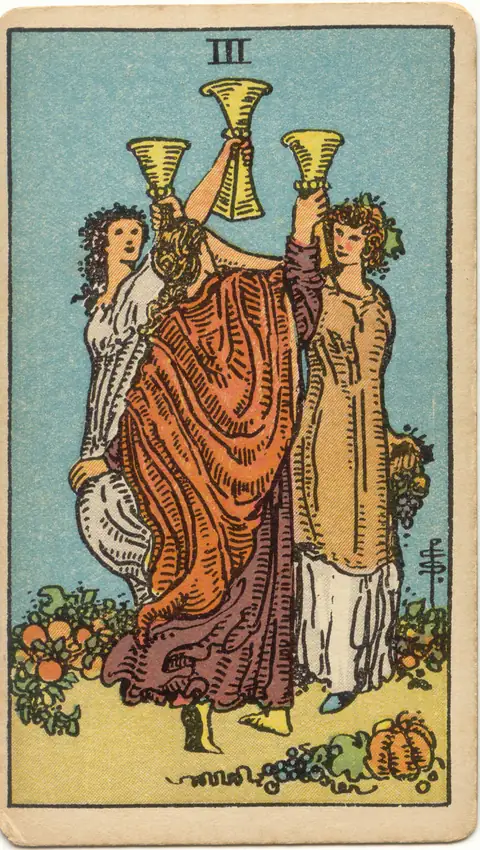
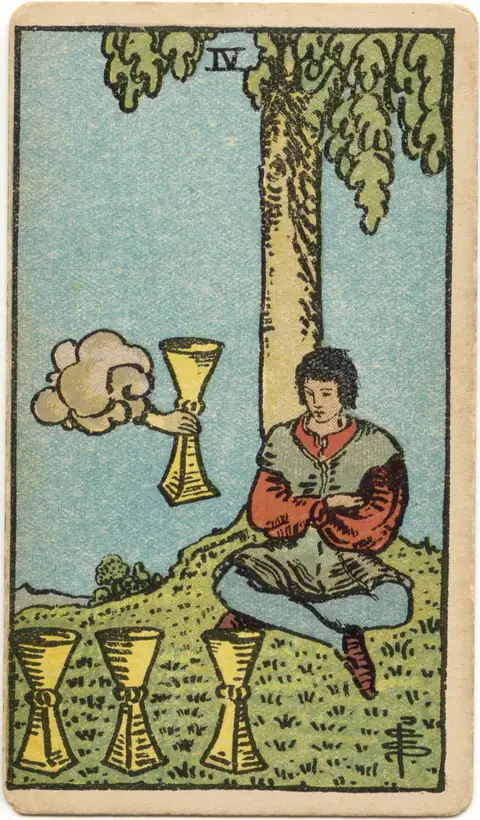
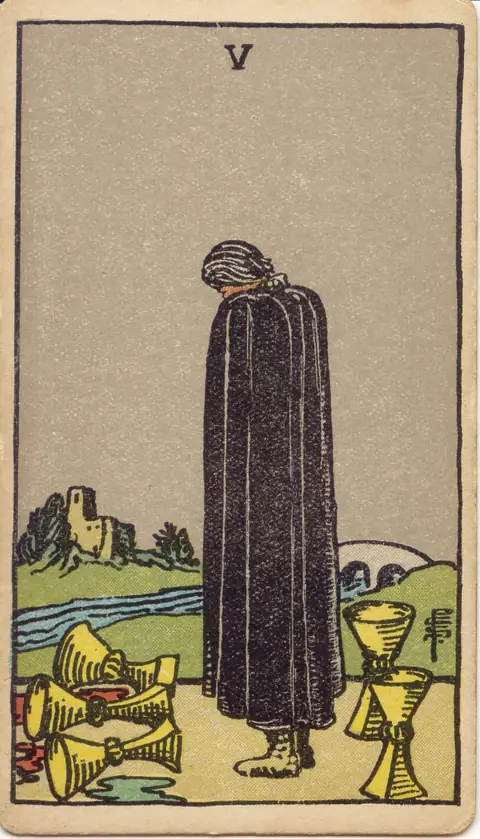
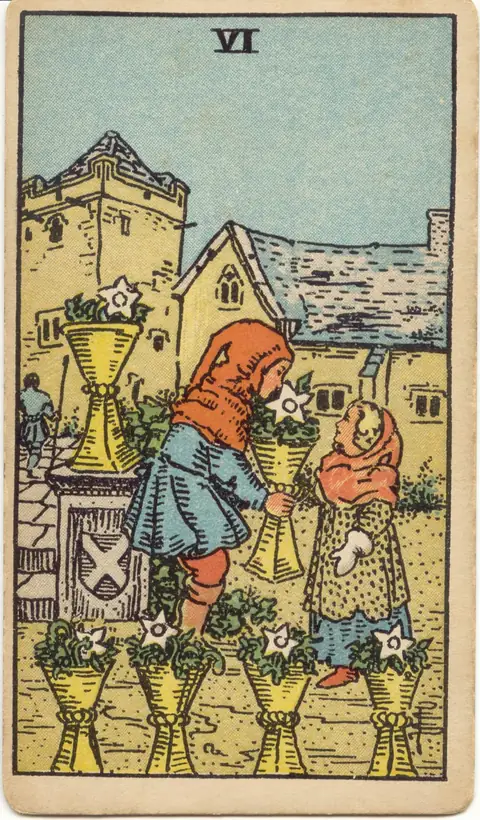
Four ways to act
Page, knight, queen, and king describe four ways of approaching feeling: discovering it, carrying it toward someone, welcoming it, holding it calmly. Attitudes, never portraits.
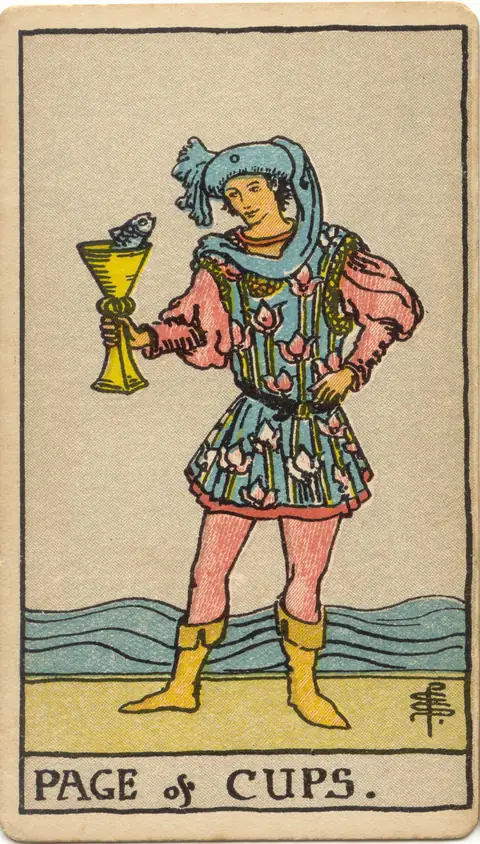
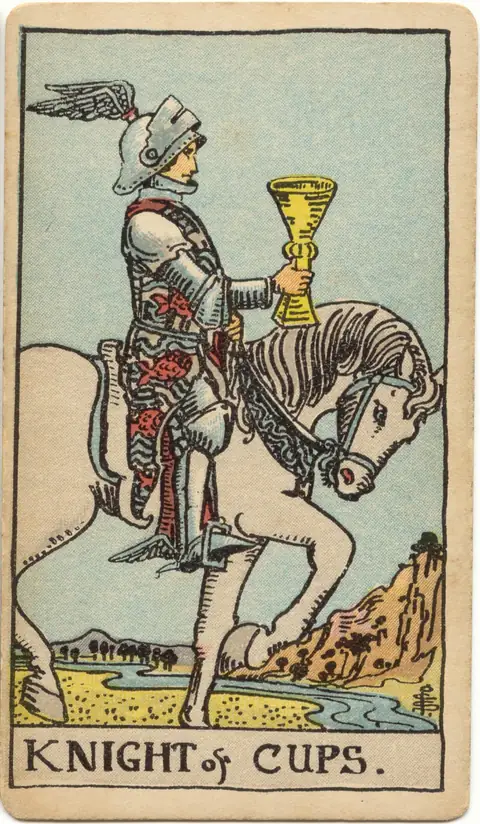
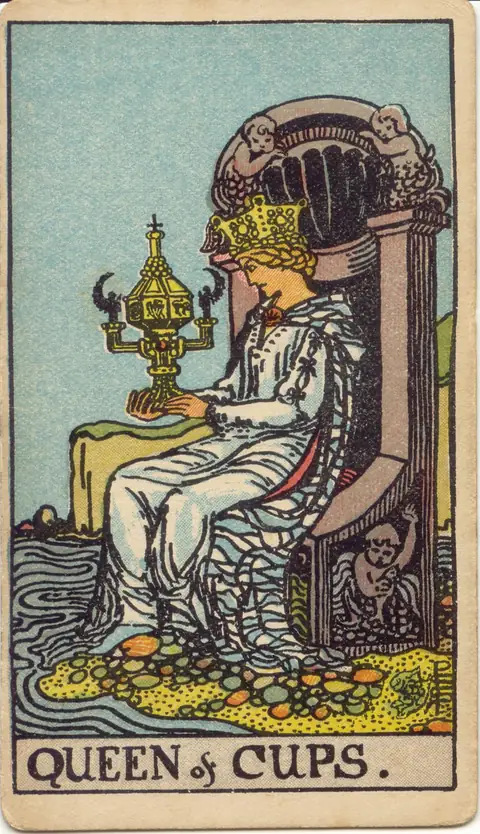
Rider-Waite: drawings by Pamela Colman Smith, 1909, public domain, via Wikimedia Commons. Images resized and compressed by Versana; Marseille Minor Arcana diagrams and card back drawn by Versana.
Frequently asked questions about the Cups
What do the Cups represent in tarot?
Cups are the suit of feelings: the suit of bonds, welcome, and what you feel. They speak of attachment, listening, and sharing. The ten numbered cards each shed light on a sensitive nuance, and the court cards on a way of entering into relationship.
Which element goes with the Cups?
Cups are associated with water. The image is natural: a vessel that holds, a surface that reflects, a liquid that takes the shape of what receives it. It is a traditional reference that helps in reading the suit, with no force of rule, and it does not apply to each court card separately.
How do you read the progression from ace to ten?
From the start to the peak of the suit, the reading follows a sensitive movement: the offering of the ace, then the exchanges, hesitations, or losses of the middle of the journey, and finally the ten, which gathers everything. Many readers see an inner path in it, which each card colors in its own way.