According to tradition, the alternation of the 2 and the zero would evoke listening accompanied by silence: the time needed to align intentions before putting them together.
In France, 20:00 is the time of the evening television news, and 20:20 is when people leave the table or when the evening really begins. The time displays a very spare pattern: a 2, a zero, a 2, a zero. Only two digits, one of which does not count in the addition.
In an addition, the zero weighs nothing: it does not change the total. It leaves space. For the calculation, 20:20 therefore comes down to two 2s set at a distance from each other: 2 + 0 + 2 + 0 = 4. The halves are worth 2 and 2, the total 4.
The 2 welcomes, listens, and seeks agreement. The 4 organizes, perseveres, and builds stone by stone. The combination tells of a simple, solid passage: two capacities for agreement that, added together, give a structure. You can think of a duo that divides up roles and sets rules for living, or of a team of two that turns good rapport into a lasting organization.
The zeros add a nuance specific to this hour. After each 2, a void: a breath, a margin. The 4 of 20:20 is not a solid wall, it is a frame with gaps. In English usage, “20/20” also describes normal visual acuity, and by extension a clear view. If the hour keeps coming back, it proposes precisely to look sharply at what you are building as a pair, and at the room left to each person within it.
20:20 in your life
As a couple, 20:20 pairs two kinds of attentiveness with a need for structure.
The 4 likes landmarks: who does the shopping, which evening you see friends, how the budget is split. Well set, these agreements prevent repeated arguments. The zeros of the hour remind you, however, that a frame that is too tight suffocates. Look at your week: is there a free moment left, with no agenda, where each person can breathe? And were your shared rules discussed by the two of you or installed by default?
Outside a relationship, the 4 of 20:20 speaks of the way to build a bond: step by step, with regular dates rather than love at first sight.
The two 2s make you attentive to small signs of reliability, a person who calls back when they said they would, who remembers a detail. This pace may seem slow; it also protects against getting carried away. Ask yourself which landmarks truly reassure you, and which mostly serve to keep others at a distance.
20:20 evokes late hours, those when you finish a file while others are having dinner.
The 4 likes work well done, but it can lock itself into it. Look at whether your methods rest on real cooperation, with defined roles and handoffs, or whether most of the structure rests on your shoulders alone. The 2 recalls that a shared schedule holds up better than a solitary effort. Ask yourself which recurring task could be documented and handed off, so that the framework holds even in your absence.
The 4 of 20:20 likes kept budgets and regular saving; the two 2s recall that household money is decided as a pair.
One concrete step: an automatic transfer, even a small one, toward a clearly named joint project. And a question: were your financial habits chosen together, or did they settle in without discussion?
20:20: nuances, tradition, and advice
20:20: angel, tarot and message
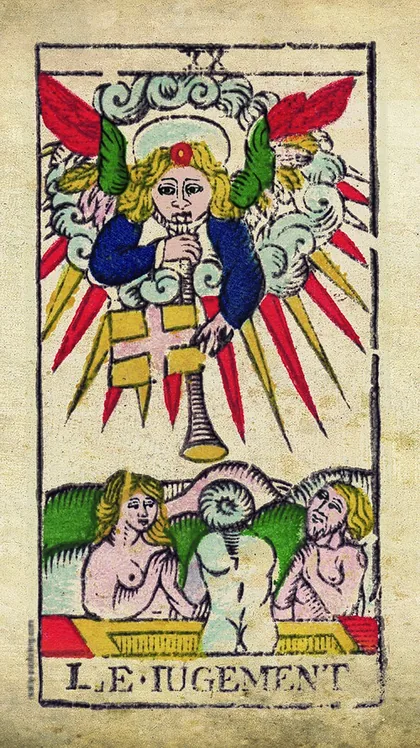
The angel Iah-hel, tarot card 20, and the message as tradition reads it.
62of 72
The angel from 20h20 to 20h40
Iah-hel
The Kabbalistic tradition gives each of its 72 angels twenty minutes of the day: 20:20 falls within those of Iah-hel, the 62nd.
In the traditional reading of mirror hours, 20:20 would sound like a call to renewal: getting back up, hearing what asks to be reborn, taking stock with clarity. The calculation adds a more earthy note, two 2s that make a 4, the patience to build. You are free to keep the momentum, the method, or both.
Two readings can coexist: the symbolic reading and the attention reading.
The symbolic reading
20:20
For those who read repeated numbers, 20:20 coming back is no accident: it draws attention to what you are living through at that moment.
and
The attention reading
20:20
Of the 1,440 minutes in a day, 20:20 takes up only one, yet it catches the eye: a doubled time sticks in the mind, and once you have noticed it, you watch for it. They complement each other more than they conflict.
If you often see 20:20
If 20:20 keeps coming back, draw two columns: what you are building with another person, and what rests on your effort alone.
An empty or overflowing column shows where to rebalance the frame, without drawing hasty conclusions.
Same family of digits
The mirror hours and angel numbers made of the same digits, and the number they repeat.
20:20 adds up to 4: 2 + 0 + 2 + 0 = 4. The zeros do not count, which leaves two 2s. The reading therefore pairs cooperation, carried by the 2, with construction, carried by the 4: an understanding that takes shape in a stable organization, with space for each person.
Why doesn’t the zero count in 20:20?
Because its value is nil, wherever it sits in the time. The zero adds nothing to the sum: 2 + 0 + 2 + 0 gives the same total as 2 + 2. It remains visible in the time, and you can read it as a space, a margin between the two 2s.
What does 20:20 mean in love?
In love, 20:20 announces nothing; it helps you reflect. Its two 2s speak of mutual attention, its 4 of a shared framework. The question it raises: does your relationship rest on habits chosen by the two of you, and does it still leave room for each person?
20:20 and being single: what to look at in love?
Two 2s make a 4: the desire for a stable bond, with landmarks. Without a partner, this hour invites you to examine your own foundations: an organized life, reliable friendships, a rhythm that suits you. A relationship settles in better in a daily life that is already solid than in a void to be filled. The zeros also remind you that evenings with no one can be a chosen space, not only an endured one.
20:20: is someone thinking of me right now?
Those who read hours as signs sometimes see in them a thought shared at a distance; for a specific person, nothing allows it to be established. At this hour of the evening, we readily think again of those we would like to see. The two 2s speak of mutual attention, the 4 of constancy. So look for regular evidence: who really calls you, who remembers what you confided to them?
20:20: is it a message from angels?
The guardian angel tradition says yes: 20:20 belongs to one of the 72 angels, and this hour would invite you to get back up and start again on new foundations. This belief makes no promise. The calculation reads two 2s and a 4: cooperation that builds a lasting structure.
20:20: good or bad omen?
Neither good nor bad: an hour does not decide what happens. In English, “20/20” describes normal eyesight, reputed to be sharp, and many read in it an invitation to see clearly. Numerology goes the same way with a solid 4 and two zeros that leave space: looking lucidly at what you are building, then choosing.