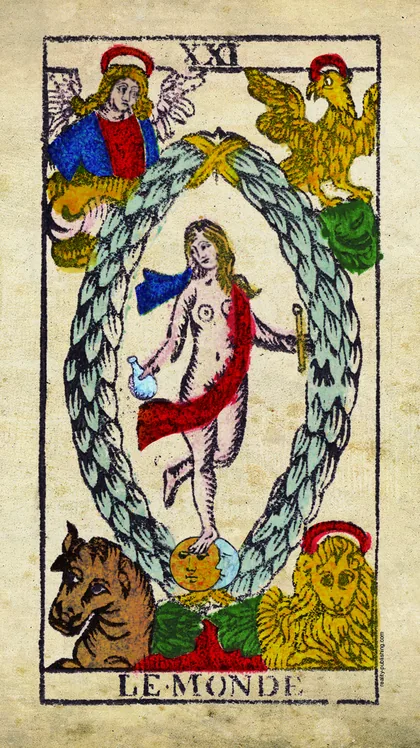
Tradition recognizes here the swing of the 2 and the 1: listening, then deciding, like learning the middle ground between welcoming and choosing.
21:21 belongs to the true evening. The meal is over, the youngest are in bed or should be, the conversations change register. The time displays the block 21 twice, where the 2 comes before the 1: listening first, initiative afterward. It is the reverse order of 12:12, which uses the same digits but puts the 1 first, in the middle of the day.
Each half reduces to 3 (2 + 1). The 3 speaks, tells stories, and invents: it puts into words what has been lived, and it likes to laugh while doing so. Two 3s make a dialogue: one speaks, the other answers. Adding the four digits gives 2 + 1 + 2 + 1 = 6, with no reduction needed. The 6 takes care, shows up, and seeks harmony around it.
The combination is one of the warmest of the day: two voices answering each other and producing a bond that is looked after. You can see in it the evening conversation that repairs a tension from the day, the story read to a child, the call to a distant parent. The 6 is not only the gentleness of the home: it is also the weight of what you carry for others. People who often notice 21:21 are sometimes those who, when evening comes, still walk around the house to check that everyone is all right.
In front of 21:21, two questions deserve to be asked: did you say today what you wanted to say, or only what you had to? And who looks after you while you look after others?
21:21 in your life
As a couple, 21:21 often arrives when the house finally calms down.
The two 3s call for a real conversation, with humor and stories, not only the inventory of tomorrow’s tasks. The 6 wants each person to feel supported. If one of you carries most of the family load, evening talk soon wears out in reproaches or silence. Ask yourself this question: what was the conversation, in recent days, that made you both laugh, and what had made it possible?
Without a partner, 21:21 draws attention to the way you tell your story.
The two 3s like to charm through conversation, and the 6 is quick to help: with a move, listening to troubles, arranging an appointment. This is generous, but it can confine you from the start to the register of helping rather than that of meeting. Look at your last encounters: did you talk about your own wishes, or mostly answer the other person’s needs?
21:21 is often the hour of messages sent too late.
The 6 likes to be of service and may find it hard to close the door: a colleague in difficulty, a client in a hurry, a team to reassure. Look at whether your sense of responsibility still respects your own limits. The two 3s recall the place of expression: presenting your ideas, leading, passing things on. Careers in training, coaching, or communication welcome this alliance well. Ask yourself where your voice is expected, and where you are content to carry out orders.
With its 6, 21:21 easily opens the wallet for those around you: a birthday present, a dinner treat, a discreet helping hand to a parent.
The two 3s enjoy pleasures that are shared. Look at the part of your budget devoted to others and the part you keep for yourself. If the second has disappeared, set a line aside for it, even a modest one, next month.
Among those who believe in twin flames, seeing 21:21 would be a sign of coming together between two linked souls, or the invitation to work on yourself in order to welcome this bond.
These readings belong to a recent spirituality, which you can receive as an image of the deep relationship. The calculation offers a complementary light: two 3s in dialogue and a 6 watching over harmony. Their alliance sketches a relationship nourished by words exchanged and mutual consideration, where each partner takes their share of the talking. One question to keep: in your close relationships, do you receive as much attention as you give?
The mirror hour tradition associates 21:21 with a message of fulfillment: recognizing the road traveled, seeing a cycle take its shape, expressing gratitude. Numerology brings its own color, two 3s talking to each other and a 6 that takes care. Keep from this message what resonates with your evening.
Two readings can coexist: the symbolic reading and the attention reading.
The symbolic reading
21:21
A meaningful coincidence, Jung would say; a message, say the angelic traditions. Either way, 21:21 speaks to you about yourself more than about chance.
and
The attention reading
21:21
Of the 1,440 minutes in a day, 21:21 takes up only one, yet it catches the eye: a doubled time sticks in the mind, and once you have noticed it, you watch for it. Both readings can coexist.
If you often see 21:21
If 21:21 keeps coming back, keep a sentence for the person who matters at that moment: a thank you, a memory, a sincere question.
And a second one for yourself: what would do you good tomorrow, to jot down before sleeping.
Same family of digits
The mirror hours and angel numbers made of the same digits, and the number they repeat.
In love, 21:21 speaks of conversation and mutual care, without forecasting anything. Its two halves in 3 call for exchange, its total 6 for harmony at home. It gives an occasion to really talk in the evening, and to see whether each person receives as much listening as they offer.
What is the number of 21:21?
21:21 adds up to 6: 2 + 1 + 2 + 1 = 6, directly, with no reduction. Each half, 21, reduces to 3. The 6 points to care for loved ones and harmony; the 3s bring expression and exchange. Together, they describe a bond kept up by words.
What is the difference between 21:21 and 12:12?
Both times use the same digits and give the same total, 6. But the order changes: 12:12 puts the 1 first, initiative before listening; 21:21 puts the 2 first. One falls just after noon, in action; the other in the evening, in the intimacy of the home.
What does 21:21 say about love when you are single?
Two 3s and a total of 6 pair speech with care. Without a relationship, look at how you get to know someone: do you let the other person discover who you are, or do you try right away to please and reassure them? The 6 readily gives before receiving. A balanced meeting often starts with a conversation in which each person tells their story as much as they listen.
21:21: a sign that someone is thinking of me?
Spiritual readings of hours sometimes say so; none can confirm it for a particular person. What 21:21 puts forward is conversation: two 3s, the wish to speak. If it makes you think of someone, ask yourself what you would like to tell them tonight. The 6 adds a question of reciprocity: are you waiting for a sign from the other person, when you could write the first message?
What should you do when you see 21:21? Should you make a wish?
Making a wish is a widespread habit at doubled hours, and 21:21, associated with fulfillment, lends itself to it. If you make one, turn it toward a bond: a hoped-for reconciliation, a conversation to dare. You can also simply say thank you to someone before sleeping. Nothing is required: the gesture counts more than the wording.
21:21: good or bad omen?
It has a rather good reputation: tradition associates it with fulfillment and with the World card. Still, the clock promises nothing, neither good nor bad news. What the calculation offers is concrete: two 3s that exchange and a 6 that takes care. Seen this way, 21:21 is above all an occasion for a sincere conversation at the end of the day.