20:02 and 02:20: two twin hours
The same digits the other way around: the two halves swap places, and the total stays 4.
- 20:022 + 0 + 0 + 2 = 4you are here
- 02:200 + 2 + 2 + 0 = 4Read 02:20 →
20:02 is the hour of organizing as a pair: putting shared life back in order and saying the agreements out loud.
You are invited to settle one concrete point together rather than let it drag on.
A taste for what is solid, which simplifies shared life.
Keeping unspoken agreements that each person understands in their own way.
By Thomas Guilhot · updated
Tradition reads two 2s framing two zeros: a bond held at each end, with emptiness in the middle, the image of a relationship that breathes.
20:02 frames two zeros between two 2s. The hour, 20, reduces to 2; the minutes, 02, are worth 2 as well. The total of the four digits, 2 + 0 + 0 + 2, makes 4.
The 20 has a particular feature: it is a 2 followed by a zero, a bond that has taken up space, with room around it. Opposite it, 02 is a 2 preceded by a zero, a bond that is just beginning. The two look at each other across the empty center. The 4 they form together is nothing like a fusion: it is a structure made of two supports set apart, like the two posts of a doorway or the two uprights of a shelf.
The 4 speaks of method, constancy, and construction; the 2, of mutual attention. At two minutes past eight in the evening, many households come together: you eat dinner, tell about your day, and decide who takes the children tomorrow morning. Shared life reorganizes itself then, after hours spent each on your own.
Its twin, 02:20, presses the two 2s against each other in the heart of the night. 20:02 holds them apart, under the evening light. One speaks of an intimate bond questioned without witnesses; the other, of a way of working as a pair that is settled out loud. When 20:02 jumps out at you, ask yourself: does what you are building with someone rest on explicit agreements, or on habits never discussed?
At 20:02, many couples gather around the table after a day apart.
The two 2s are at the edges, the zeros in the middle: each brings back their day, and then it has to be turned into a shared evening. The 4 draws attention to what gets organized without ever being discussed: who clears the table, who answers the school’s messages, who suggests outings. A simple question: if you swapped roles for a week, what would each of you discover about the other’s load?
Without a relationship, 20:02 falls when the workday is closing and the evening is still to be filled.
Two 2s set apart: two people each leading their own life before crossing paths. The 4 suggests that lasting encounters are often born from regularity: the Tuesday community theater, the volleyball team, the same market every week. Rather than waiting for the spark, look at your calendar: which evening could you devote each week to a place where the same faces return?
20:02 suggests the hour of end-of-day reviews, the ones you do when you shut down the computer or prepare for tomorrow.
Two 2s at a distance recall collaborations between departments, between a day team and an evening team, between a contractor and their client. The 4 asks for clear handoffs. Do you leave readable instructions for the person who takes over your work? Can you say where your responsibility ends and where someone else’s begins? These clear boundaries prevent many misunderstandings.
For your finances, 20:02 falls at the time when people willingly tally up the day.
The 4 values regular follow-up: a budget reviewed each week, scheduled savings, even modest ones, shared expenses divided in black and white. Tonight, could you write down three expenses from the month and check that they match what you had planned?
The same digits the other way around: the two halves swap places, and the total stays 4.
The angel Umabel, tarot card 20, and the message as tradition reads it.
Umabel
The Kabbalistic tradition gives each of its 72 angels twenty minutes of the day: 20:02 falls within those of Umabel, the 61st.
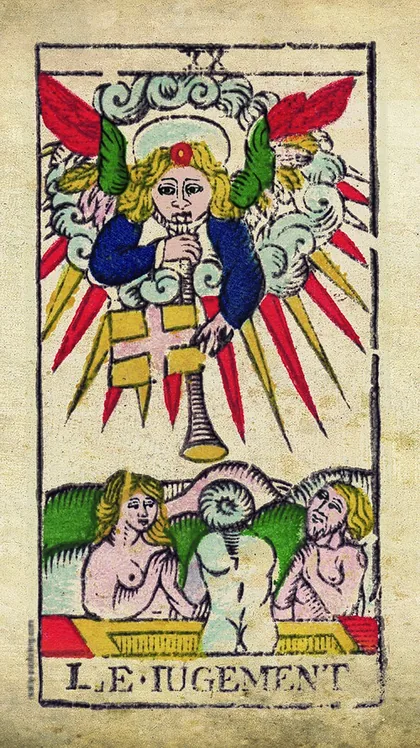
Judgement
The reading of hours links 20:02 to the card that bears the hour’s number, 20.
The meaning you find in it is up to you. Read the profile of Umabel, or see the 72 guardian angels.
Two readings can coexist: the symbolic reading and the attention reading.
For those who read repeated numbers, 20:02 coming back is no accident: it draws attention to what you are living through at that moment.
Of the 1,440 minutes in a day, 20:02 takes up only one, yet it catches the eye: a doubled time sticks in the mind, and once you have noticed it, you watch for it. They complement each other more than they conflict.
When 20:02 appears, write on a piece of paper the three points to settle tomorrow, with the name of the person concerned for each.
A short list, set down in the evening, lightens tomorrow’s conversation.
The mirror hours and angel numbers made of the same digits, and the number they repeat.
20:02 · reversed hour
20:02 is the hour of organizing as a pair: putting shared life back in order and saying the agreements out loud.
2 + 0 + 0 + 2 = 4 · How to read a mirror hour
A time is read through its digits, its two halves, and its total: add the four digits, then reduce to a single one (11, 22, and 33 stay whole).
The same digit 2 times: the reading dwells on it.
20 and 02 both reduce to 2: the same number, with the digits in another order.
This number gives the time its main reading.
2 + 0 + 0 + 2 = 4
20:02 speaks of shared organization more than of feelings. Its total, 4, carries method and construction; its two halves are worth 2, the number of the bond. As a couple, it invites you to look at how you divide tasks and decisions. It says nothing about the future of the relationship: it suggests a conversation, not a conclusion.
Because each half is reduced by adding its digits: 2 + 0 = 2. The zero does not change the value, but it changes the reading: the 20 is a 2 with room around it. For the hour’s total, you add the four digits: 2 + 0 + 0 + 2 = 4.
Nothing is required: some see the moment for a wish or a thought sent out, others a simple landmark. When it catches your eye, you can use it to check an everyday agreement: an appointment to confirm, a task to divide, a promise made to a loved one. The 4 likes what is concrete and verifiable; a simple action, done that same evening, extends this moment well.
Two 2s at the ends, two zeros in the middle, a total of 4: two distinct lives that can come together. Without a relationship, observe whether your evenings leave room for anything other than routine: an activity where you meet people, an invitation accepted. The 4 builds slowly; a solid encounter is often born from a regular setting, a club, a class, more than from a spectacular chance.
For a widespread reading, the hour that jumps out at you would signal that a loved one has you in mind; at the scale of a specific person, this remains unverifiable. Early in the evening, you often expect a call or a message, and your eye watches the screen. The 4 prefers reliable signs: a person who cares about you generally shows it through repeated gestures. Instead, observe who keeps their word in your relationships.
Same total, 4, and same halves worth 2; everything else sets them apart. 20:02 is read at the table, on coming home from work, with the two 2s at the edges like two guests seated face to face. 02:20 sticks them together in the center, in the middle of the night. The first invites you to organize daily life out loud, the second to question the solidity of a bond in silence.
Without a separator, 2002 evokes a year, and many readers of repeated numbers see in it a palindrome that carries balance between two people. The sum does not change: 2 + 0 + 0 + 2 = 4. If you come across it on a license plate or a ticket, the numerological reading remains that of the hour: two distinct bonds that build together. The meaning you put into it is yours.
Tap a time to read its meaning.