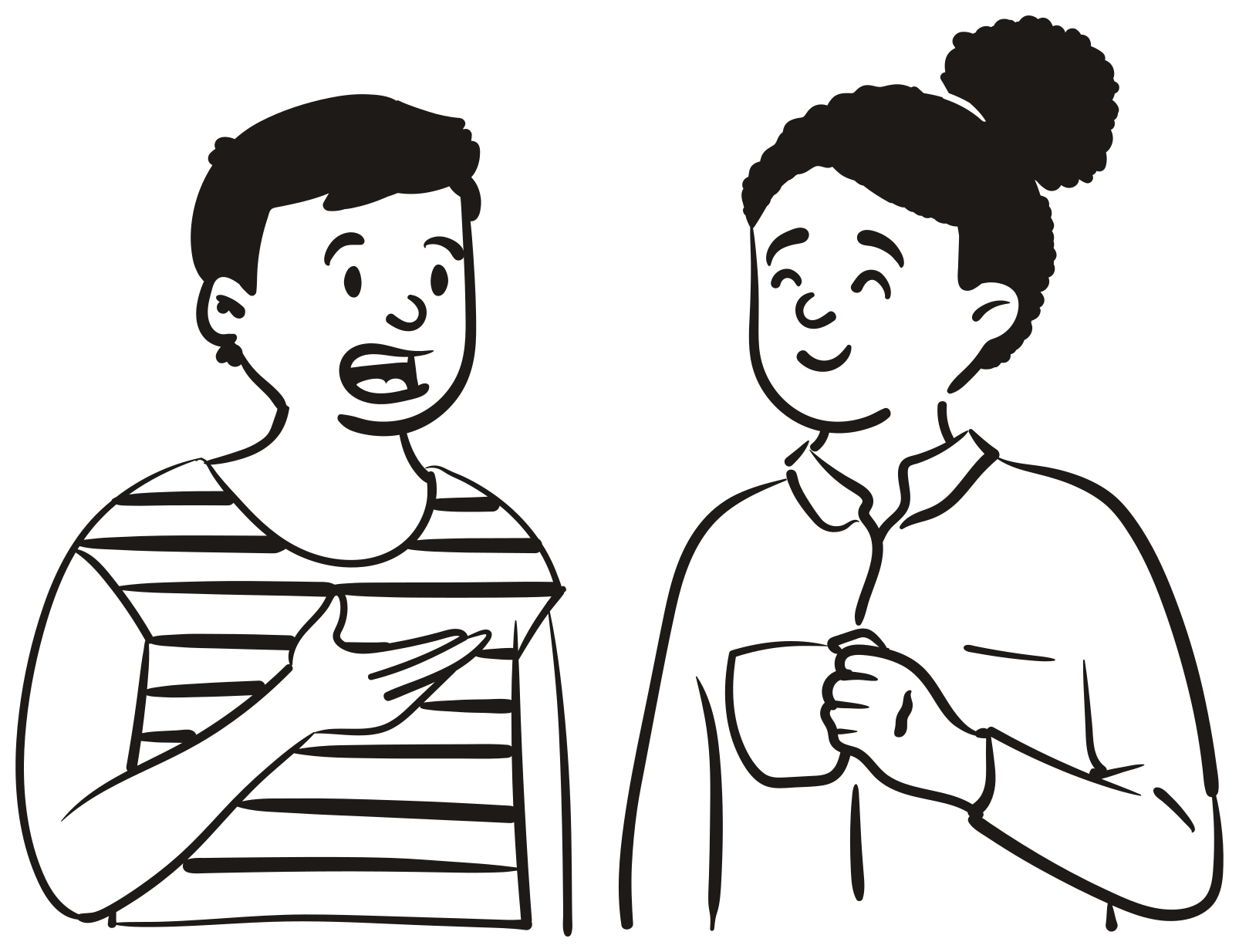
A missing 2 points to cooperation that does not come naturally: listening, taking others’ opinions into account, and delegating are learned with experience.
The 2 is said to be missing when no letter of your birth name or first name equals 2, that is, no B, no K, and no T. Despite the fairly common T, the 2 is often missing: B and K are rare in French.
A missing number does not point to a flaw. It indicates a quality that is not acquired in advance and that life invites you to build. For the 2, it is about listening, cooperation, and sensitivity to others.
In practice, you probably learned early to manage on your own. You move at your own pace, you decide without waiting for everyone’s opinion, you probably prefer to do things yourself rather than explain. These abilities have their value. What takes more effort is adjusting your pace to a partner’s, sensing what a loved one feels without being told, or giving a discussion time to reach a conclusion.
The absence of the 2 does not stop you from being in a couple, having friends, or working on a team. It means that these areas call for deliberate attention, where others function by reflex. This know-how, learned rather than received, can in fact make attentive partners.
Remember that the grid looks only at letters. A life path number, an Expression number, or a Soul Urge number equal to 2 or 11 already brings this quality by another route.
Qualities and downsides
Qualities
An early autonomy, useful when no one is there to help.
A speed of decision that does not depend on everyone’s opinion.
A listening that is learned deliberately, and therefore conscious.
Bonds that are chosen rather than endured.
Downsides
Finishing a teammate’s part to go faster.
Preparing your answer before the other person’s sentence is over.
Discovering late that a loved one had been offended.
Judging it costlier to ask for help than to do without.
You can count on other supports: several elements of the profile take over from the missing 2.
A 6 in the grid brings a sense of responsibility toward loved ones. A 9 gives an openness to others. And if your life path or Soul Urge number is a 2 or an 11, listening is already part of your road or your motivations.
Missing number 2: nuances, tradition, and advice
How it shows up
The absence of the 2 shows in situations with another person.
In group work, you finish the other person’s part to go faster. During a conversation, you prepare your answer before the sentence ends. You sometimes learn that a friend had been offended for weeks, without having noticed. Asking for help seems costlier than managing alone, even when help would save you time.
How to develop 2
The 2 is developed through the practice of relationship.
A few concrete exercises: rephrase what the person you are talking to has just said before responding; ask one more open question than usual at a meal; before deciding a matter that concerns someone else, take a day to consult them.
Activities in pairs are also excellent ground: a two-person sport like table tennis or roped-together climbing, partner dancing, a project carried out as a duo with divided tasks. They force you to take another person’s rhythm into account.
Also observe your reactions. When you get impatient because someone is slower, ask yourself what their slowness teaches you.
What if several numbers are missing?
A missing 2 sometimes comes with other gaps, and it is the combination that informs.
With the 6 also missing, commitments to loved ones take double the effort: listening and taking charge do not come naturally. With the 4, patience is lacking twice, toward others as toward long tasks. With the 9, openness to people very different from you becomes the main challenge. One or two absences are still common in a grid. Also look at the excesses: a very present 1 or 8 accentuates the autonomy that the missing 2 already signals.
A tip
In your next important conversation, set yourself a simple rule: give your opinion only after asking the other person two real questions, and listen to the answers to the end.
No. A missing 2 only means that no B, K, or T appears in the name: it is a skill to acquire, not a fault to repair. Karmic debts belong to another notion, attached by some schools to the numbers 13, 14, 16, and 19, and they cannot be deduced from absent letters.
Does the missing 2 change with a name you go by?
No. The grid is calculated on the name recorded on the birth certificate and on the first name (on all first names in the full reading). A spouse’s name containing a T or a B does not erase the original absence, even if it may accompany a period of life where cooperation takes up more space.
Can you have a missing 2 and a life path 2?
Yes. The letter grid and the life path are independent: one comes from the name, the other from the birth date. In this case, your road regularly confronts you with cooperation, even though this skill does not come to you instinctively. These situations then become so many occasions to learn it.
Is the missing 2 common?
Yes, fairly. For the 2 to be missing, the name must contain no B, no K, and no T. B and K remain rare in French names; only the T comes up often. Many identities contain none, like Marie Durand or Louis Moreau. If you also count middle names, a T has a better chance of slipping into the grid.
Does a missing 2 prevent you from living as a couple?
No. The absence of the 2 means that listening and adjusting to a partner’s pace call for deliberate attention, not that they are impossible. This learning can even become a strength in a couple: asking questions, rephrasing, consulting before deciding. The grid is always read with the other numbers of the chart, notably the road and the motivations.
How do you develop the 2 when it is missing?
Through regular practice of relationship. Restating in your own words what the person you are talking to expresses before any answer, asking one more open question at a meal, taking the time to consult before a decision that concerns someone else. Activities in pairs, like partner dancing or a project carried out as a duo, also force you to take into account a rhythm other than your own.