For tradition, the 1 of initiatives and the 6 of responsibilities take turns: this time would evoke how to hold personal wishes and commitments to loved ones together.
At 16:16, the afternoon tips over. School pickup is approaching, the light changes, the concentration of early in the day frays. The time itself has a simple shape: the same block twice, 16 then 16, like a pattern repeated on wallpaper.
Each half reduces to 7 (1 + 6). Two 7s side by side are the same question asked twice: why am I doing this, and is it still useful? The 7 looks at things sideways, checks, and doubts before committing. But adding the four digits does not stop at this doubt: 1 + 6 + 1 + 6 = 14, then 1 + 4 = 5. The total is a 5, the number of movement, curiosity, and the urge to go and look elsewhere.
The combination therefore tells of a passage: you question yourself twice, then you move. It is not reflection that wins, but what it sets off. A person who often notices 16:16 can read in it a concrete reminder: a question that has been going around in circles since morning perhaps deserves a trial rather than a third examination.
The digits present add their nuance. The 1 brings initiative, the wish to decide for yourself; the 6 brings responsibility toward loved ones. Both come back twice, in equal measure. At this hour when many people are already thinking about school pickup or the trip home, the balance between what you want to launch for yourself and what you owe to others becomes very concrete.
16:16 in your life
As a couple, 16:16 puts a finger on the decisions you keep postponing by dint of examining them: changing homes, going away for a few days, rethinking how the Wednesday chores are split.
The two 7s weigh the pros and cons, each on their own; the 5 prefers to try and adjust afterward. When the hour stops you, ask yourself which subject you have been discussing for months without ever putting it to the test, and what a trial limited to a single weekend would cost.
Without a relationship, the two 7s of 16:16 describe a way of meeting people that runs through analysis: rereading a profile three times, imagining the conversation before having it, finding a reason not to go.
The 5 of the total reminds you that curiosity is kept alive by stepping out of your habits: an evening class, a new activity, a different route. Ask yourself a simple question: does this scrutiny protect you, or does it keep you from discovering someone?
Two 7s that make a 5 describe a way of analyzing for a long time, then needing to move on to something else.
Look at how your late afternoons go: are you still rereading a document that has already been approved, or do you switch tasks to regain energy? The 5 tolerates routine poorly; the 7 hates rushing a job. Between the two, one possible arrangement: reserve analysis tasks for the morning and keep the end of the day for calls, travel, and quick trials. Also ask yourself which project is waiting for a first test rather than a new study.
On the money side, the 5 of 16:16 likes novelty and impulse purchases, while the two 7s prefer to compare at length.
Before a major expense, set yourself a deadline: two days of reflection, not three weeks. And for a small project you keep putting off, what modest, capped trial budget would let you test it without committing everything?
16:16: nuances, tradition, and advice
16:16: angel, tarot and message
The angel Vehuel, tarot card 16, and the message as tradition reads it.
49of 72
The angel from 16h00 to 16h20
Vehuel
The Kabbalistic tradition gives each of its 72 angels twenty minutes of the day: 16:16 falls within those of Vehuel, the 49th.
In the mirror hour tradition, 16:16 would be a call to let go of a certainty that has become too narrow, to accept that a mental construction wobbles so that something else can come through. Numerology adds its own echo: two 7s that doubt, a 5 that dares to move. It is up to you to decide what meaning to give to this afternoon appointment.
Two readings can coexist: the symbolic reading and the attention reading.
The symbolic reading
16:16
For many people, seeing 16:16 again is a synchronicity in Jung’s sense: a meaningful coincidence, which tradition reads as a message.
and
The attention reading
16:16
Of the 1,440 minutes in a day, 16:16 takes up only one, yet it catches the eye: a doubled time sticks in the mind, and once you have noticed it, you watch for it. It is up to you to see which one speaks to you, or both.
If you often see 16:16
If 16:16 keeps coming back, each time write down the question going around in your head at that moment.
After a week, reread the list: the one that comes back most probably awaits a small concrete trial, not one more round of thinking.
Same family of digits
The mirror hours and angel numbers made of the same digits, and the number they repeat.
16:16 adds up to 5. The sum of its digits is 14, which reduces to 5; each half, for its part, is worth 7. The reading therefore pairs two moments of reflection with a total turned toward change and curiosity. It announces nothing; it offers a question: what is waiting to be tried rather than weighed again?
Why do I keep seeing 16:16?
Two readings coexist. In the symbolic reading, an hour that comes back would be a synchronicity, a discreet reminder to pause. In the attention-based reading, this moment matters in your day (end of classes, coffee break, a glance before leaving) and the eye retains symmetrical times while forgetting 16:09. In both cases, 16:16 can serve to take stock of your afternoon.
What should you do when you see 16:16? Should you make a wish?
Nothing is required. Many people like to whisper a wish at a doubled hour; if this gesture speaks to you, turn it into a precise intention tied to the 5: trying something, going out, changing a habit. A small action is enough too: walking for a few minutes, calling someone you have not talked to in a long time. The idea is to turn hesitation into movement, whatever interpretation you keep.
16:16 meaning in love: what to look at as a couple or when single?
Two halves in 7 and a total of 5 describe a tension between scrutiny and curiosity. Without a partner, notice whether you put every possible encounter through such a screening that you never risk one: the 5 prefers an accepted coffee to ten hypotheses. As a couple, look at the doubts you keep to yourself: which ones deserve to be put to the other person rather than chewed over?
Seeing 16:16: is someone thinking of me?
In several intuitive approaches, the doubled hour would connect two minds occupied with each other; this cannot, however, be demonstrated for any given loved one. 16:16 suggests another avenue: if someone pops into your thoughts at that moment, the 5 encourages you to write to them rather than let the guess go around in circles like the two 7s.
16:16: is it a message from angels?
That is how the angelic tradition reads it: each time slot is entrusted to a guardian angel, and 16:16 would carry a message of questioning, presented on this page. Numerology does not settle this belief; it adds its reading of the calculation, two 7s and a total of 5, to keep alongside it as food for thought.
16:16: good or bad omen?
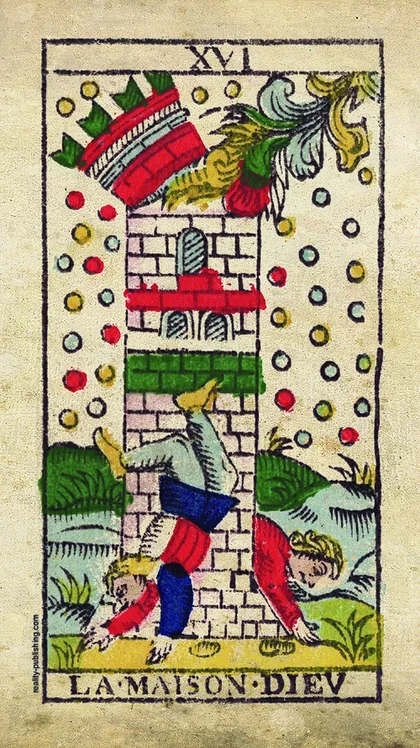
Neither, because no hour announces an event. Some traditions associate 16:16 with a tarot card reputed to be brutal, the tower struck by lightning, hence its reputation as a worrying hour; you can read in it instead the end of a rigidity. The 5 of the calculation goes in that direction: a change you choose, not a threat.