12:21 and 21:12: two twin hours
The same digits the other way around: the two halves swap places, and the total stays 6.
- 12:211 + 2 + 2 + 1 = 6you are here
- 21:122 + 1 + 1 + 2 = 6Read 21:12 →
12:21 is the hour of caring without keeping score: looking after the people close to you without forgetting yourself.
You are invited to give without keeping count, while holding on to your own place.
A generosity that builds trust.
Giving until you are exhausted without asking for anything in return.
By Thomas Guilhot · updated
For tradition, a 1 on each side and two 2s in the middle draw a protection: the idea of a will surrounded, of a bond that would support your own choices.
12:21 reads the same in both directions: 1, 2, 2, 1. The two 1s hold the edges, the two 2s press together in the middle. The image is quite telling: one person on each side and, between them, what is shared. The 1 moves forward and decides for itself; the 2 listens and looks for agreement. Here, autonomy frames the relationship instead of opposing it.
The halves confirm this reading. 12 gives 3, and 21 also gives 3: expression, exchange, words that circulate. Two 3s make a conversation in which everyone gets a turn. The sum of the four digits, 6, adds a note of responsibility: looking after what you have built together and keeping your commitments. The path is easy to follow: two distinct people who talk to each other end up answering one another.
The time of day matters too. At 12:21, the midday meal is starting or ending; it is often when colleagues or relatives share a table and settle small common questions: who does what this afternoon, who picks up whom at the station.
Its twin, 21:12, sets the same digits in the opposite order. The 1s move to the center, surrounded by the 2s. 12:21 speaks more of what you bring to a bond; 21:12, of the place you keep for yourself within that bond.
In an established relationship, the 6 of 12:21 lives in the invisible tasks: thinking of a gift for your sister-in-law, following up with the plumber, asking how the meeting went.
The two 1s at both ends show that each of you holds one edge of the bond. Take stock of an ordinary week: do these small attentions come from both sides, or almost always from the same one? The halves in 3 suggest talking about it simply, in passing over a meal, without keeping accounts.
Without a relationship, the 6 readily seeks to become indispensable: doing favors, listening at length, becoming the reliable person in the circle of friends.
The two 3s of the halves remind you that a bond is also born from a light conversation, from a laugh shared on a café terrace at lunchtime. Before your next encounters, ask yourself what you are looking for: to show you are useful, or to have a good time? And when choosing, notice whether the person across from you can receive as well as give.
The 6 is recognizable in the person who looks after the atmosphere, notices the colleague who is withdrawn, takes over the file someone else dropped. 12:21 is a chance to check the balance of these commitments.
The two 1s of the hour remind you that your own work counts too: a whole afternoon spent helping others out sometimes leaves your own priorities untended by evening. A useful question when you get back to work: of the tasks planned before 6 p.m., which one is really yours? The 3 of the halves adds this: say clearly what you can take on, rather than accepting it in silence.
When it comes to money, the 6 of 12:21 looks at what you spend on others: gifts, advances to a relative, a lunch check paid without discussion.
The two 1s at the edges recall your own projects. A simple exercise: over one month, separate what goes out for other people from what funds a goal of your own, and see whether the proportion suits you.
The twin flame currents readily read 12:21 as an hour of recognition between two souls: two 1s facing each other, linked by the double 2 in the center, the image of a bond that answers itself from one edge to the other.
Some see in it a reminder that this bond needs to be worked on, others simply a sign that it exists; the authors do not agree, and the reading is reported here as they give it. The number, for its part, adds this: the 6 speaks of shared responsibility and reciprocal care. Whatever name you give to a strong relationship, the question stays concrete: does each person hold their edge, or is one carrying all the weight?
The twin flame: where the idea comes from, what can be observed
The same digits the other way around: the two halves swap places, and the total stays 6.
The angel Haamiah, tarot card 12, and the message as tradition reads it.
Haamiah
The Kabbalistic tradition gives each of its 72 angels twenty minutes of the day: 12:21 falls within those of Haamiah, the 38th.
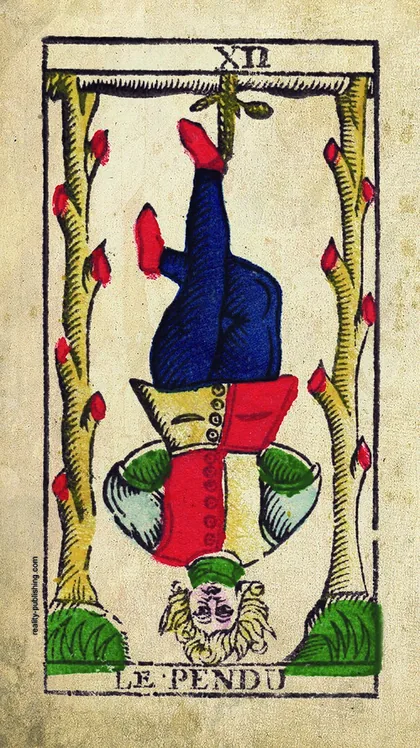
The Hanged Man
The reading of hours links 12:21 to the card that bears the hour’s number, 12.
The meaning you find in it is up to you. Read the profile of Haamiah, or see the 72 guardian angels.
Two readings can coexist: the symbolic reading and the attention reading.
A meaningful coincidence, Jung would say; a message, say the angelic traditions. Either way, 12:21 speaks to you about yourself more than about chance.
Of the 1,440 minutes in a day, 12:21 takes up only one, yet it catches the eye: a doubled time sticks in the mind, and once you have noticed it, you watch for it. Both readings can coexist.
In the evening, write down on a piece of paper one favor you did during the day and one you received.
After a week, compare the two columns: they often say more than an impression about whether the exchange is balanced.
The mirror hours and angel numbers made of the same digits, and the number they repeat.
1221 means trust: nurturing an optimistic outlook and looking after peace at home.
12:21 · reversed hour
12:21 is the hour of caring without keeping score: looking after the people close to you without forgetting yourself.
1 + 2 + 2 + 1 = 6 · How to read a mirror hour
A time is read through its digits, its two halves, and its total: add the four digits, then reduce to a single one (11, 22, and 33 stay whole).
Each digit adds its own shade before the total.
12 and 21 both reduce to 3: the same number, with the digits in another order.
This number gives the time its main reading.
1 + 2 + 2 + 1 = 6
Because another way of counting adds the hour and the minutes as two blocks: 12 + 21 = 33. This 33 is only the result of a method: it is neither an angel number nor the total used here. One single rule applies to every hour, so that results stay comparable: the four digits are added one by one, 1 + 2 + 2 + 1 = 6. The two counts do meet, incidentally, since 3 + 3 gives 6 again.
In love, 12:21 highlights the balance of the exchange. The 6 it gives speaks of care and attention, and the two 1s at the ends remind you that each partner keeps their own place. There is no announcement here about what comes next in your story: the hour serves rather as a reminder to ask yourself whether the small attentions come from both sides, or always from the same one.
Two readings coexist. The first, symbolic, sees a synchronicity, a meaningful coincidence that tradition hears as a call to harmony. The second points out that around noon, glances at the clock multiply, and that the eye holds on to symmetrical shapes. You are free to choose yours. In both cases, the hour can serve to look at who counts on you, and on whom you count.
The 6 that 12:21 gives speaks of commitment, the two 3s of conversation. Without a relationship, notice what you offer in the first exchanges: listening, favors, humor? The 6 tends to make itself useful in order to be liked. A meaningful encounter rests rather on the pleasure of being together. After noon, a shared lunch is a good place to check.
Some readings make 12:21 the echo of two people thinking of each other at the same moment. Nothing allows this to be verified for a particular person, and numerology does not settle the matter. What the hour proposes: look at whom your own thoughts turn toward. Its symmetry evokes two people face to face; ask yourself whether the exchange flows in both directions, and how to check simply, with a message or a lunch.
Both hours bring together two 1s and two 2s, and give the same total, 6, with halves worth 3. The shape changes everything. 12:12 is a mirror hour: the minutes repeat the hour, like a pattern that comes back. 12:21 is a reversed hour: the minutes read it backward, and the hour folds back on itself around the double 2. One evokes repetition, the other a face-to-face, two people each holding an edge.
Written 1221, on a ticket, a license plate, or a meter, the number keeps the same digits and still reads the same in both directions. The calculation stays identical: 1 + 2 + 2 + 1 = 6, the number of care and commitments. What changes is the context: without the clock, the lunchtime moment disappears, and what remains is the image of a balanced exchange between two edges. The meaning you give it in your situation is yours.
Tap a time to read its meaning.