What keeps money flowing
A percentage of income given or invested in a cause you choose
- Clear contracts, signed, with no hidden clause
- Collaborators paid what they are worth and on time
- Ceilings set in advance for pleasure spending
The Devil plugs your money into desire: you draw business when you acknowledge your craving and negotiate without being swept up.
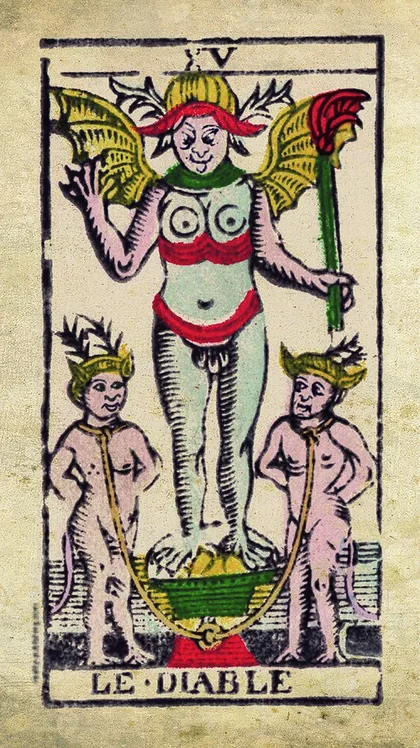
You sense what people really want and know how to offer it to them. Sales, negotiation, image, markets where craving counts: your magnetism opens doors and gets deals signed. When you know your limits, this force turns into solid income rather than fleeting seduction.
Large sums, luxury, or the promise of quick gain can take over your judgment. Spending to impress, going into debt for status, or staying in a lucrative situation that weighs on you creates dependence. A spending ceiling set in advance keeps your head clear.
By Thomas Guilhot · updated
Money comes through desire and negotiation.
Money comes through desire and negotiation. You earn well where you need to convince, arbitrate, take calculated risks, and handle large amounts. The ideal setting is demanding and paid by results: commissions, bonuses, equity in the company, businesses of your own. Fixed-salary positions with nothing at stake dull you. Your limit is ethics: a gain obtained by deceiving someone ends up, according to the method, costing more than it brought in.
For the 15, material success goes through a test: keeping a cool head in front of big sums. The 15 attracts money quickly; what keeps it is honesty in contracts and generosity in circulation. Pay your collaborators without haggling over every cent, thank those who help you earn, turn down a deal that smells like a shady arrangement. The more the money serves a shared project, the more it comes back.
A percentage of income given or invested in a cause you choose
Quick gains obtained through a dubious arrangement or a half-truth
Sales negotiation and luxury goods sales, Market finance and wealth management, Investment real estate and development…
These points: material point, money entry point, material karma, crossroads point, career point.
A symbolic reading of the Destiny Matrix: food for thought about yourself, never a verdict or an established fact.
The material point comes from the year of birth: you add its four digits, and repeat as long as the result is above 22.
Fictional example, 1987: 1, 9, 8, and 7 make 25, then 2 and 5 make 7, the Chariot. The money entry point adds the center, 3: you get 10, the Wheel of Fortune. The material karma adds the material point and this entry point, 7 and 10, making 17. The crossroads combines the money entry point and the relationship entry point, 10 and 9, making 19; the career adds the entry point and the crossroads, 29, reduced to 11.
No, it announces nothing. This card speaks of attraction and attachment: money matters, it attracts, and it can also hold on to you. The reading invites you to observe what truly motivates you, so you choose rather than endure. Well understood, this clear-sighted view helps you decide your commitments calmly. It preserves your freedom to choose.
By preparing your arguments, knowing the amount below which you refuse, and leaving silence after your proposal. Your presence already does a lot; the numbers do the rest. Avoid giving in to the enthusiasm of the moment: a night of reflection before signing protects your budget and your pride.
A simple framework helps: decide in advance the share saved, the share spent, the share invested, then do not touch it under the influence of emotion. Asking for a second opinion before a major commitment avoids impulsive decisions. The pleasure of earning remains legitimate; it is better channeled by rules set down in a cool moment.
Illustrations: Nicolas Conver’s Tarot de Marseille, dated 1760, restored by Tarot World Project, CC BY-SA 4.0 license, via Wikimedia Commons — images resized and compressed by Versana.