Tarot divination: reading and limits
Tarot reading is the art of reading the cards like a mirror: a way to reflect on a question, without predicting anything.
By Thomas Guilhot · updated

Tarot divination at a glance
A practice of reading images, where the spread sheds light on a question without ever claiming anything about what comes next.
- Use
- A tool for reflection
- Since
- The late 18th century
- Here
- No predictions
By Thomas Guilhot · updated
An image, not an answer
What it can offer
- What you notice: an image puts words on a situation you are already observing.
- Paths for reflection: a card opens up questions, and you keep the decision.
- A way to lay out your situation: describing an image helps clarify what matters.
What it does not say
- What is going to happen: no card sees the future, and no reading here claims to.
- What another person thinks: a spread speaks about your outlook, not about their mind.
- What you should decide: a spread sheds light on a question, and the decision remains yours.
The key stages
Tarot reading refers to using the cards as a support for interpretation, as opposed to using them as a card game; this page sets no date.
Origins
A person chooses an open question, one that leaves room for reflection rather than a ready-made answer.
The deck takes shape
They shuffle the deck, then draw one or several cards, each placed in a position whose meaning is announced in advance.
Reading
They describe each image before interpreting it, noting what strikes them, then connect the cards to one another.
Today
Afterward they keep some perspective: the reading serves as a path for reflection, and the decision always remains theirs.
How to read it
The image
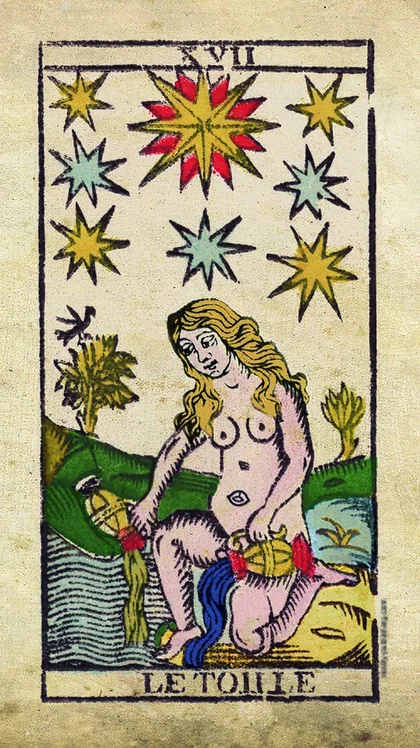
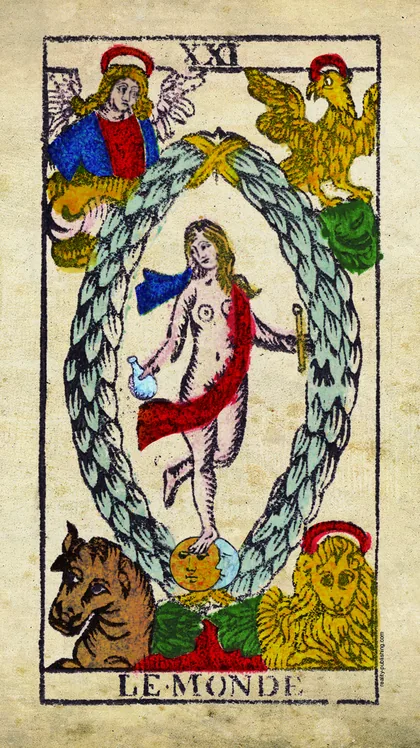
Look at the image before the meaning: gestures, objects, setting, colors. What you notice first often says something about how you see the question.
The number
The card’s number gives a reference point: a beginning, a foothold, a passage, or a completion, according to the progression that many readers see in it.
The position
The card’s place in the spread clarifies its role: resource, obstacle, context, or question. Read all the cards laid out before holding on to any single one.
Frequently asked questions: Tarot divination
What is tarot divination?
This is the name for using tarot as a support for reading and reflection, as opposed to using it as a card game. The cards are described, related to one another, then interpreted in light of the question asked.
Does tarot divination predict the future?
No prediction is made on Versana. A spread sheds light on a present situation and opens up questions; it invites you to name what matters, but no card guarantees anything about what follows, and the decision remains yours.
How do you draw the cards?
Formulate an open question, shuffle the deck, then draw one to three cards and lay them face up. Describe each image, look at its number and its place, then reread the whole while asking yourself what resonates with your situation.